How the Colors We See can Blind Ourselves

Solving complex issues and thinking fast comes in handy, especially when you are in potentially life threatening situations. For my friend Anthony Jackson, it’s second nature to him. He thrives at it, and uses this ability to serve us all, while wearing a bulletproof vest to work.

This time he did not need it, as the only threat was the unsolved phrase in front of him. The Wheel of Fortune bus came to Richmond in 2018, and Anthony was randomly selected to come on stage. No sweat, solved the puzzle with ease. Then invited for the next audition, 15 puzzles to solve in 5 minutes; was able to get through 8 of them. Then a letter inviting him to Los Angeles to be on Wheel of Fortune solving word puzzles with Pat Sajak and Vanna White; I’m sure he never thought his degree and career in Criminal Justice would lead to this.
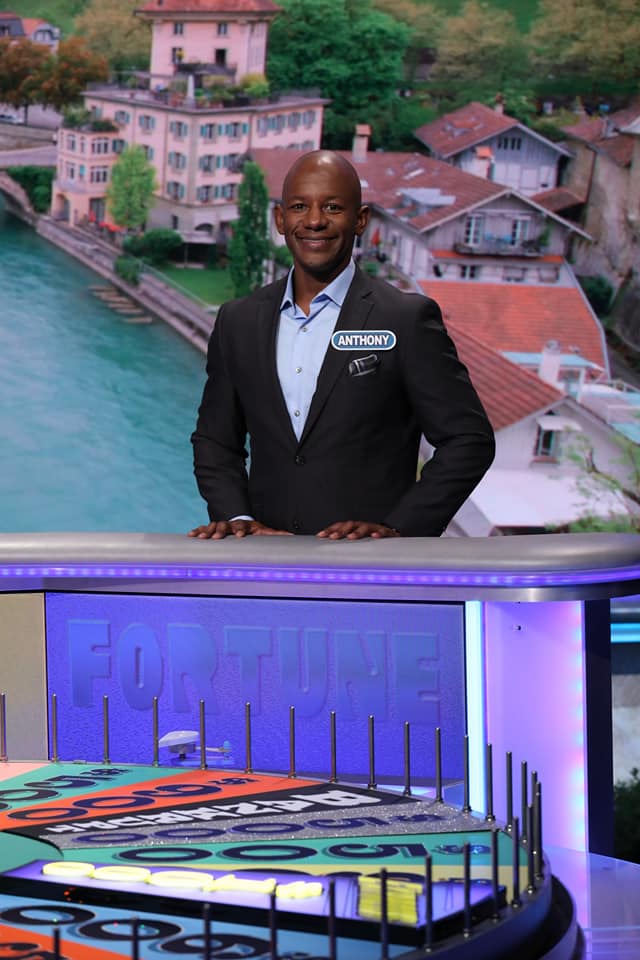
Anthony on set at Wheel of Fortune, solving puzzles is not just for police work

Being Big Buddy Buddies in and out of our Comfort Zone

Anthony and I met at a camping weekend for Comfort Zone Camp, a bereavement camp for kids who have lost a parent, guardian, or sibling. Started by someone who lost both her parents, Lynne Hughes turned her pain into purpose where her grief became a purpose for children grieving. We serve as big buddies for these weekend camps where kids from all walks of life who lost a parent or a sibling in heartbreaking ways, and yearn for someone to understand, listen, and relate, can be reassured that scars do heal and they can grow from it all. Many camps we have spent together with our little buddies during those transformational weekends, and there is a ‘why’ behind it all.

‘Those who have a why to live can bear with almost any how.’ (Victor Frankl)

For a Grandmother and two Uncles, how a Mother’s wish became a purpose

Anthony was raised in Williamsburg, Virginia with his parents Charles and Hope Jackson, and older sister Yolanda. He did not have a racial construct in mind while young, though he started noticing race for the first time in middle school. At Jamestown High School, the school being 75-80% white at the time, most of his friends were white or Asian and he felt welcomed and played in the school band, and would freely associate with anyone. He also played fife with the Colonial Williamsburg Fife & Drum Corps from 5th grade through high school. The organization was majority white, however he never felt excluded or different and was fully accepted. This is where most of his lifelong friends came from, and where a group of friends developed that have been in each other’s weddings, and they still travel together.

Off to the University of Virginia for college, though he became more aware of racism, his college friends just knew him as Anthony and he felt that he was never looked at differently.

As I learned more talking with Anthony, he shared why he serves others at Comfort Zone Camp, and perhaps in a broader way in Criminal Justice. It is for family that are treasured memories shared by his Mom, and the love for her and them.
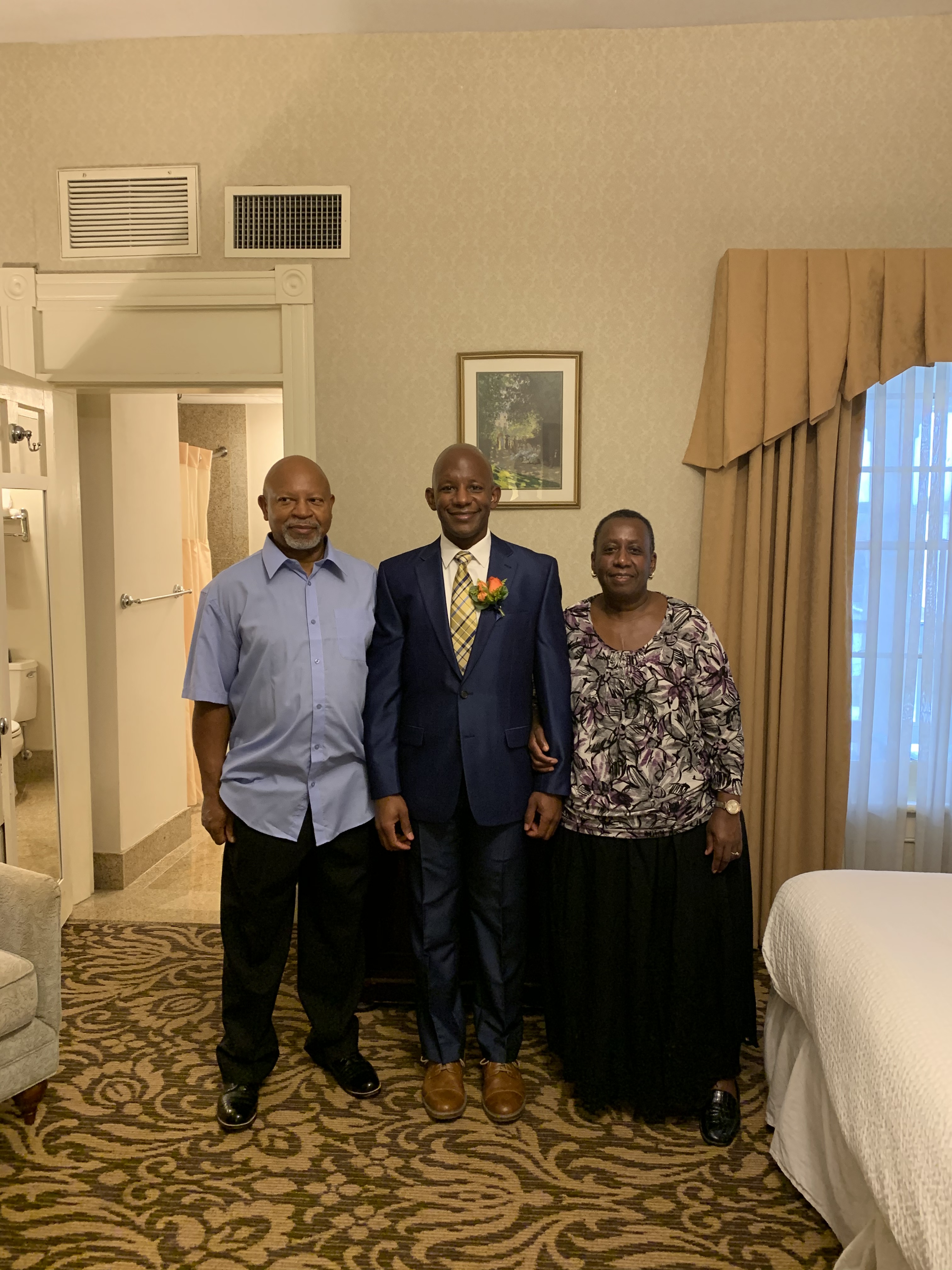
With his parents, Charles and Hope Jackson

Anthony’s mom, Hope Jackson, was one of eight children and she lost her mother at the age of 12 due to a brain issue. Then on her 18th birthday, her little brother (Anthony, 13 years) died; he was undergoing a medical emergency and they called 911. Hope held her little brother until the ambulance arrived and then he went unconscious. She went with him to the hospital in the ambulance and he never regained consciousness, taking his last breath in her arms. Ten years later, when she was 28, she lost another brother, Troy. In a span of 16 years, a Mom and two brothers gone.

Unexplainable and unforeseen grief became fuel for Anthony’s ‘why’ to honor his uncles, Hope has told her son that Comfort Zone Camp would’ve been good for her and her brothers after the losses. She was the oldest of eight kids and the only girl; her youngest brother was just a year old when her mom died. She went to college a month after Anthony’s death and grieved on her own away from home. She took on a motherly role with her brothers and focused on that after their mom’s death, which a lot of kids do in similar situations. Anthony is named after his late Uncle Anthony.
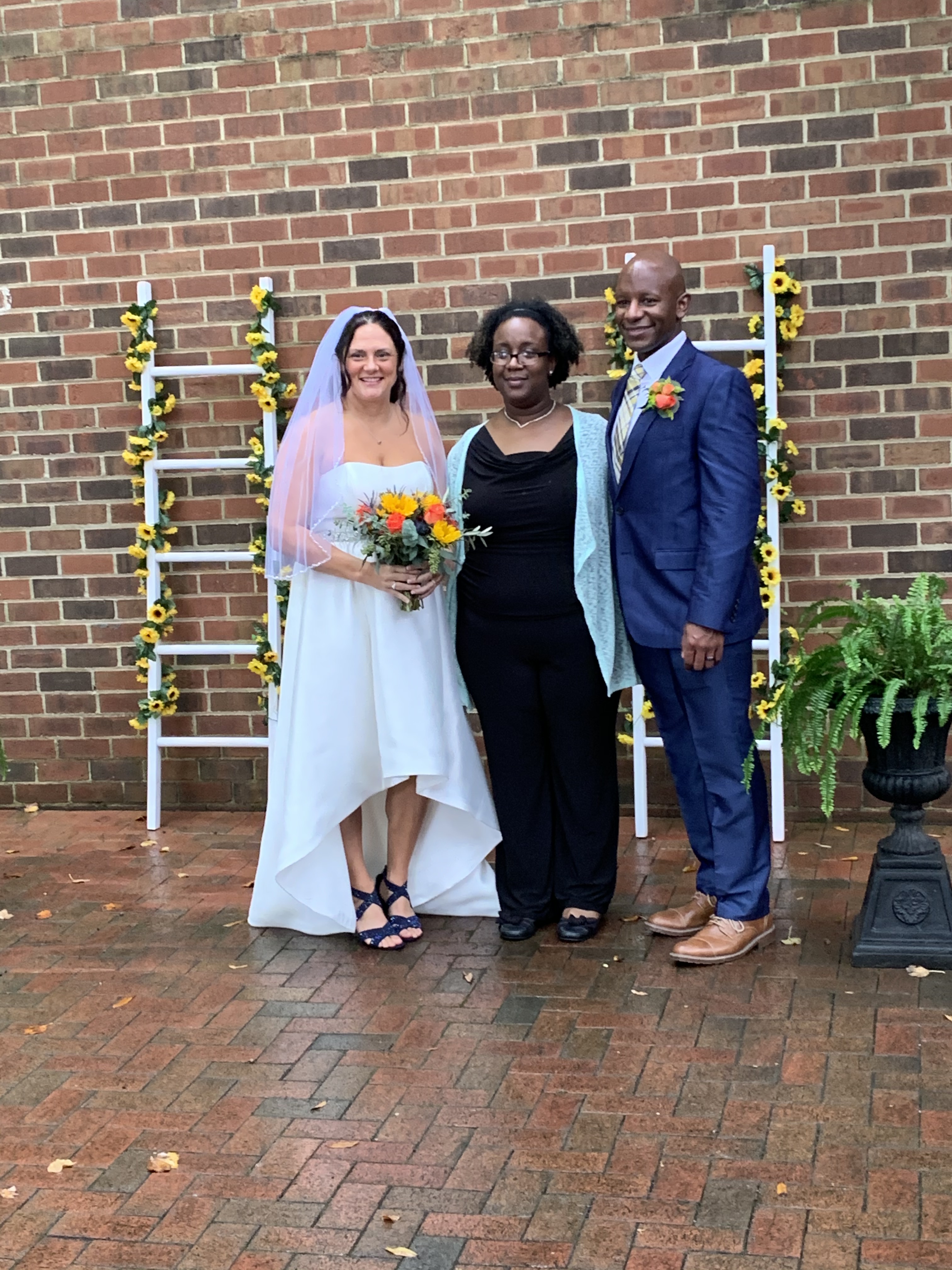
With his sister Yolanda and wife Karen

Hope (and Charles), I just want to say you have raised an authentic difference maker of a son and he is paying it forward for you, his namesake Uncle Anthony and Uncle Troy, I am sure many of his little buddies at Camp over the years are grateful having crossed paths with him.

‘We build too many walls, and not enough bridges.’ (Isaac Newton)

Seeing the Blue before Black, and not anything else

Anthony has been in law enforcement almost 14 years, starting in March 2007 as a patrolman. He has been in an investigative unit more than half his career, split up over the years (2010-14, 2016-18 and 2020). He enjoys complex problem solving and serving his community, and received his Masters in Criminal Justice at Virginia Commonwealth University (VCU). I knew seeing through his eyes as a police officer, who is black as well, would help us all relate to each other better and have an appreciation and understanding for those that serve to protect.

It has happened to him, just being Anthony, driving in a neighborhood where it looked like he did not belong. He was stopped by a police officer and asked where was he going and why is he here. Because he is black. Anthony gets it, yet is so cool and calm, does not overreact. The issue is he should not have had to react at all.

As a patrolman he was assigned to predominately poor and minority areas, never affluent, and he found that they related well with him. Criminal Justice in his experience has more to do with economics than race, as it is more biased against the poor, which also tend to be minorities. That said, when one of his officer colleagues was told to come in a separate entrance at a home of a white citizen while doing some investigative work because he was black while the white officers could come through the front door is infuriating. They all stood up for each other and it was the front door or nothing.

If I were to have a #bleedasone hall of fame, that event is in it. Fist bumps to all of you.

Yet, as a police officer, Anthony’s experience is many tend to see the blue before the black.

‘I shall allow no man to belittle my soul by making me hate him.’ (Booker T. Washington)

Handling unrest and the right to express

It’s complicated, yet understandable. People were outraged and what happened to George Floyd, and it travelled outside of Minneapolis. I spoke with Anthony on this subject, the strife and unrest coupled with being in law enforcement and being black.

Yes, Black Lives Matter however they should always matter and not just when talking about police brutality; he also noted that more black people die at the hands of other blacks. Anthony has also been told he should be ashamed of being a police officer, and rather than responding he calmly and confidently knows that we are all better served by having a diverse police force with people of high character.

Every law enforcement officer he knows, including himself, is upset. It was inexcusable what police officers did to George Floyd, including those who stood by and should have stepped in. When it comes down to it, we all should know what’s right and wrong and therefore have a duty to stop others from doing wrong.

What he has experienced in the wake of it all is other destructive reasons riding in on a trojan horse in the name of George Floyd. COVID aided in fueling the unrest however expressing anger in destructive way takes away from voicing anger in a controlled and productive manner.

Angry? Every right to be. Raw Emotions? Definitely. The question is how we can best express it all and where do we go from here; it has to involve constructive conversations that involve listening with intent to learn and respect, not just hear and dismiss.

In my mind the best and most recent example of how anger can be productively funneled and effective is when Jon Stewart went before the U.S. Congress to take issue on the lack of benefits for 9/11 first responders.

Behind the Badge and Being Himself

Anthony does go off -duty, and that is what many who see him with a badge don’t see. He is a husband, son, brother, volunteer, friend to many, saxophone player, marathon runner, and of course big buddy. He is more than the uniform, and what meets the eye. Too often we are all guilty of putting people in boxes and categorizing them, as that is easier than the relational work required in getting to know them.

He has gone on dates with white females and never been an issue; his first wife of 8 years was white. While her older sister was surprised when she first met him, her family (including her older sister) welcomed him with open arms; he was treated like a son/brother and were great towards him.

Anthony recently remarried this year and what a story, he and his wife Karen met in police academy in March 2007, just under fourteen (14) years ago. They were friends and though life took them down different roads, they came full circle and are together. They are a biracial couple yet love and friendship bleed as one also, Karen’s parents accepted him from day one.
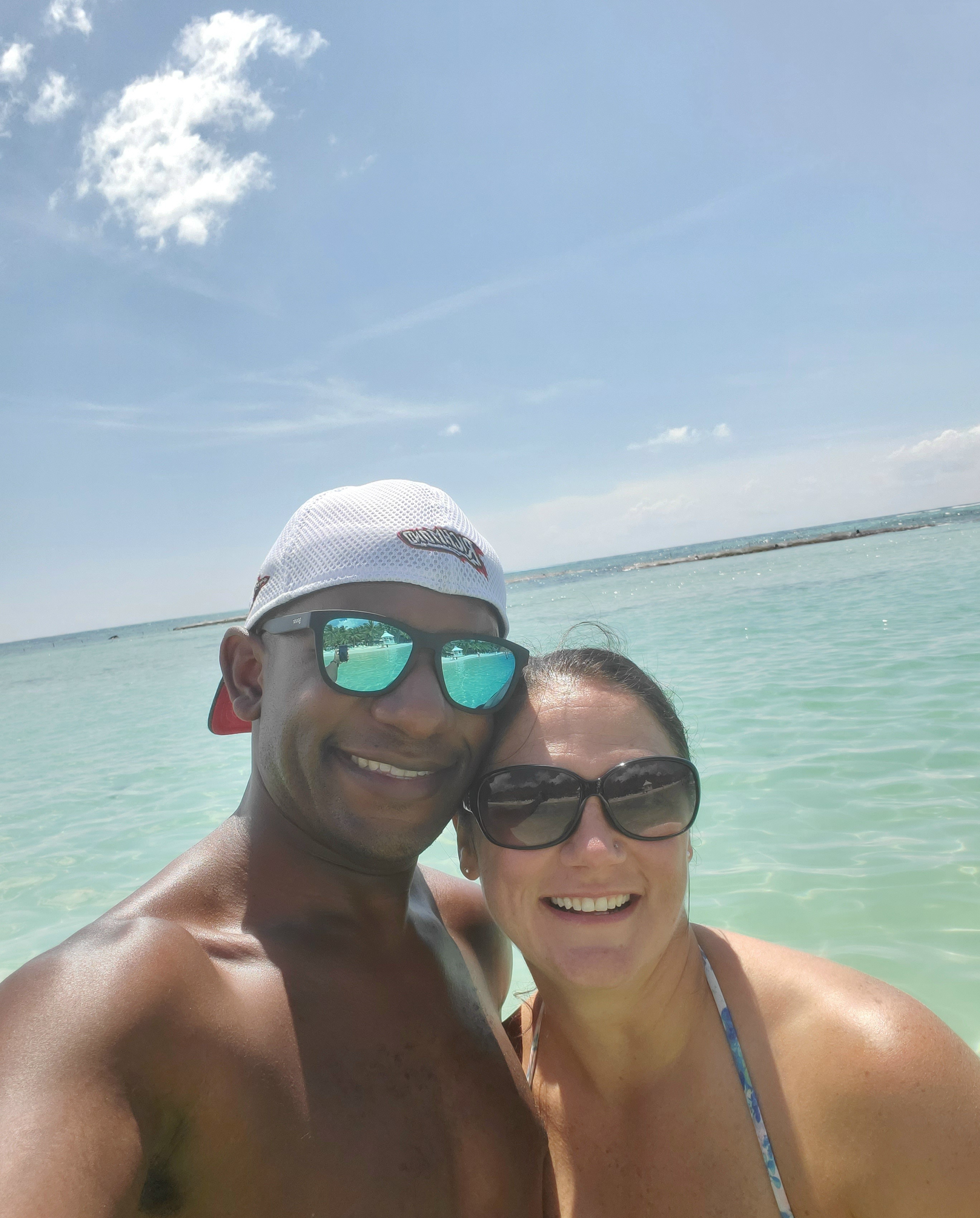
Anthony and his wife Karen, note to self: find out where this is

There have been times when others tried to make them uncomfortable, and they handled it with grace.

A simple pleasure such as a meal out should be just that, without the side of a racial drama. They were spending some welcome time together at a local restaurant when a nearby table of eight started talking about someone being black (not Anthony) and everyone in the group did not realize that a black person (Anthony) was sitting nearby and within earshot. The wait staff came over to check on Anthony and Karen several times to make sure they were alright. The restaurant manager came to them and apologized as they were being subjected to others insecurities and racial tension.

As someone who has black family members that I love unconditionally, and being married to the love of my life who is part Cherokee Indian, this is both sad and infuriating to hear.

I’ll never do that, to just did, to something we all can do

It started when he was at the Police Academy, let’s see if I can run 3 miles in 30 minutes. When I asked Anthony about his marathon in 2019, knew it had a first chapter to the story. From 3 milers, to Monument Avenue 10Ks to Half Marathons, all getting stronger and faster with each. His first half marathon in 2012 and was over 2 hours (2:19:37), and then in 2015 he finished under 2 hours (1:57:07). Anthony always felt the marathon distance was asking too much, the training and how it is simply life consuming.

After getting separated in 2018, he decided that 2019 would be the year he could focus. He was running PRs in 5Ks and 10Ks and trained hard with Race Team RVA; Richmond would be the place for his first marathon. The summer months paid off and he crossed the finish line just over 4 hours. Got you 26.2, and he is good, no need for a marathon encore.

Mission 26.2 complete

As for something we all can do, how about being open and conversing with others unlike ourselves. Have those constructive yet uncomfortable conversations with an intent to listen to learn and respect, and it’s alright not to agree. We have more in common than we realize and in many cases give a chance to realize.

We can all use an Anthony in our life, one who protects others by serving others, and knows his why no matter the how. I know he has a heart for the brokenhearted and encouraging them serving alongside him at Comfort Zone Camp.

Thank you Anthony for reminding us that we can all make a difference with our differences, because we all #bleedasone.
We All Can Be MOre

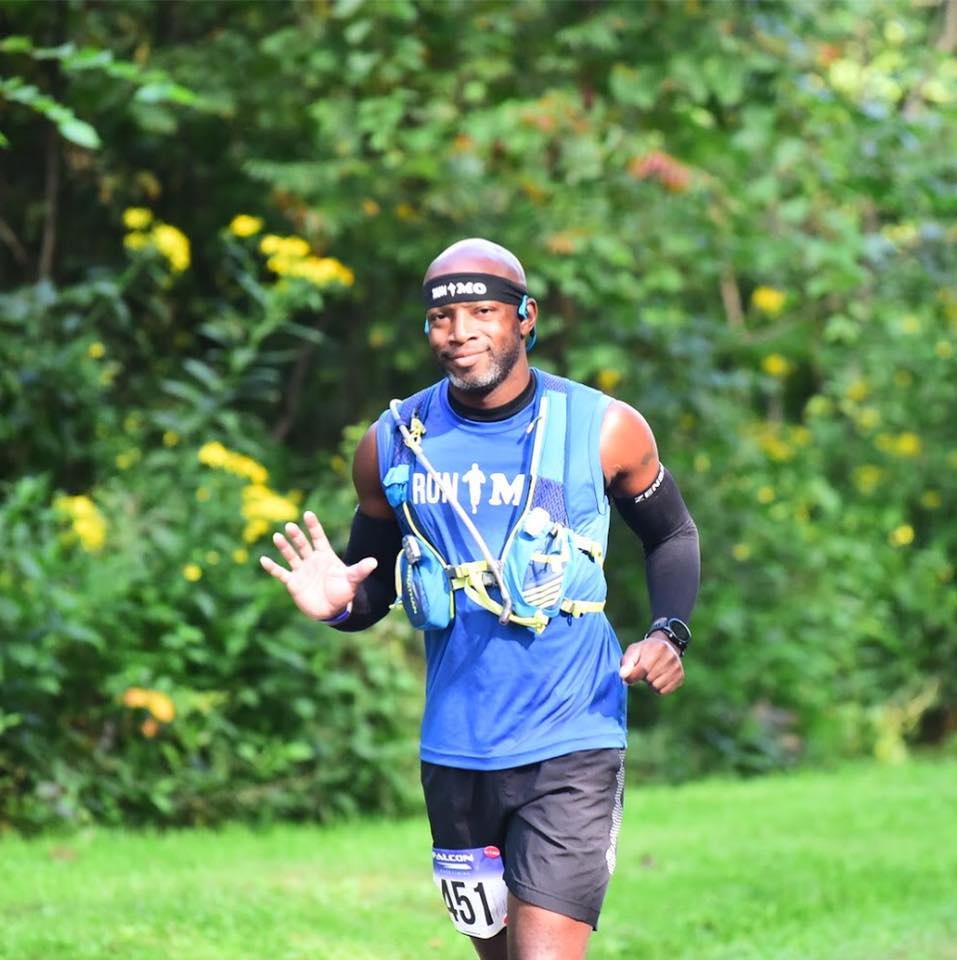
When someone says ‘Give me 20′ or ’30’ for that matter, he gives it new meaning, routinely getting up anywhere between 2am and 4am, and gets it done. In miles. It is not uncommon for Solomon MOrris Whitfield to run a marathon type distance before going to work. He has heard it and trust me, he is not nuts. Just an ultra runner.

During our recent conversation, it came to me. ‘MO, you ran 2014 miles (before you do the math in your head, that is an average of 167 miles a month, and 5.5 miles per day) the year we met.’ At the time I had never run more than a handful of miles, consecutively. Not that the belief or desire to was there anyway. What we did know is that we connected, both of us were single dads at the time, born in the American Midwest, and I had started to train for my first half marathon in Richmond, Virginia. Our story is one of many others where an unfortunate tragedy brings people together.

At the intersection of tragedy and friendship, our paths crossed

MO and I connected through Meg’s Miles, a running group and compassionate community brought together by tragedy. Meg Menzies was an elite runner and was out on a training run for the Boston Marathon on January 13, 2014 when she was killed by a drunk driver. Her still pictures still move hearts. MO and I shared many miles together (on and off the road) and as we got to know each other, learned how much we had in common. We were single dads and now as husbands, we are always willing to be there for one another and share life lessons and matters of the heart conversations.

As the first conversation for this blog, I knew MO would be an inspiring story to share to help us all to carry each other as we look at ourselves to encourage us to Be MOre and, if you so desire, Run MOre too.

So you all know, when it comes to knowing MO, it’s the M.O. that you always capitalize the MO!

“Fearlessness means taking the first step, even when you don’t know where it will take you. It means being driven by a higher purpose, rather than by applause. It means knowing that you reveal your character when you stand apart, more than when you stand with the crowd.” (Chadwick Boseman)

First experience with Racism, closed curtains and closed minds

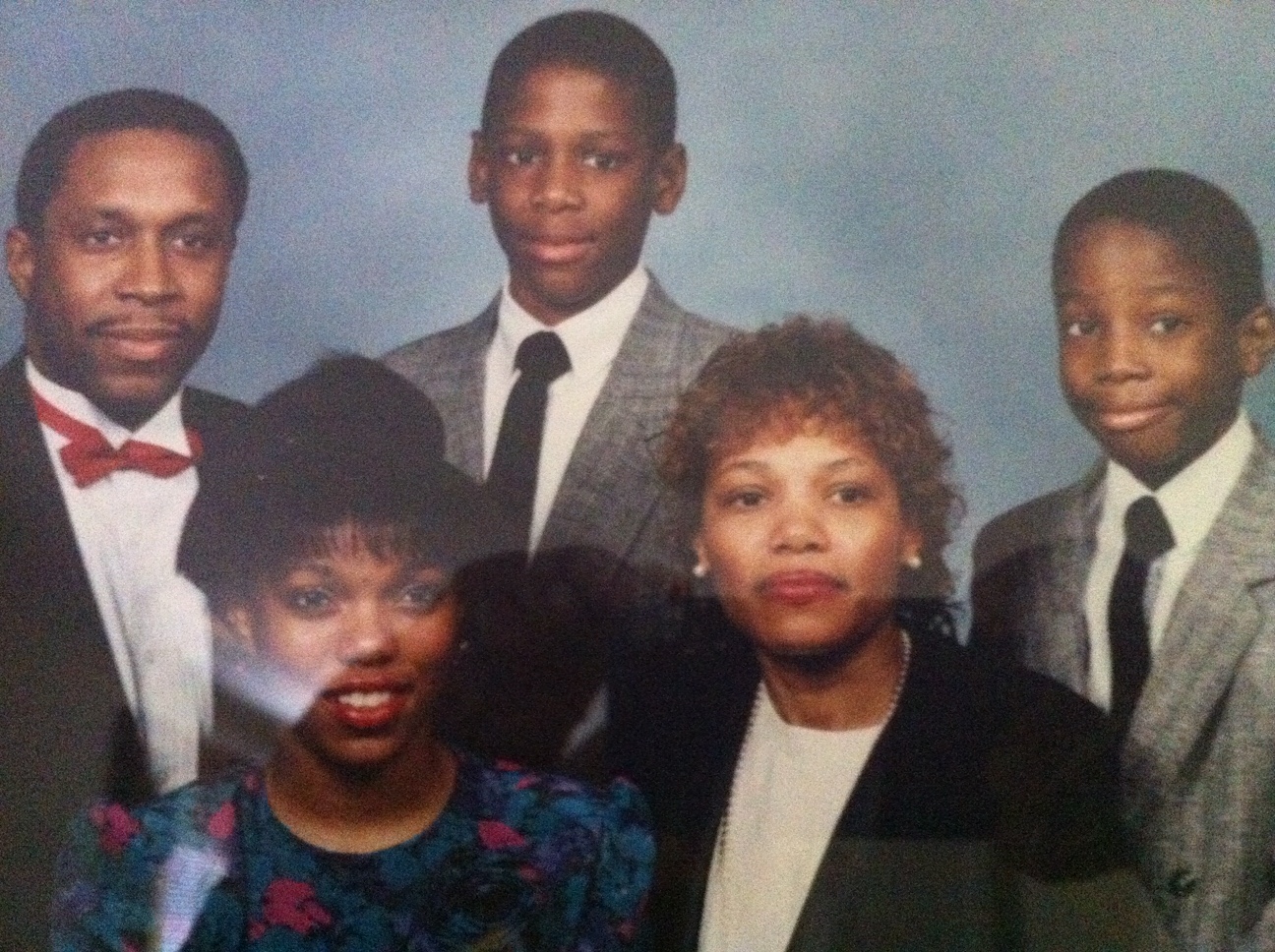
MO is one of three kids, born to Solomon and Brenda Whitfield in Kalamazoo, Michigan. He has a twin brother (Julius) and sister (Crystal) who is seven years older. His memories of Michigan are vague as the family moved to the Washington, DC area when he was six years old and settled in Springfield, Virginia.

MO (far right) with his twin brother Julius, sister Crystal, and parents Solomon and Brenda Whitfield

His parents encouraged friendships no matter who, where from, or neighborhood. MO went to Robert E. Lee High School, and being black and at a school named after a Confederate General, it did not bother him as one would expect. The school was quite diverse with many ethnicities and religions, and he was on the track team as a sprinter. His best friend was Indian, and having a mother who was multiracial (Black, White, and Cherokee Indian) MO understood who he was.

When I asked about his first experience with racism, he remembered it clearly; pain always prompts memories to the surface. He was 15 and was asked to the Sadie Hawkins dance, where girls do the asking. His date (Catheney) was Asian and when he picked her up, his date’s Mom said to her daughter ‘I need to talk to you when you get home.’ She was under the impression that she would be bringing home someone of her same ethnicity and advised her daughter that she should not be dating MO, and needs to shoot higher.

As you can imagine, MO was hurt and confused; made him feel that being black was negative though he is nice, got good grades, and is always. respectful to others.

By the way, Solomon and Brenda, you raised a wonderful son.

MO and Catheney continued dating anyway, however it came at a cost of emotional turmoil. They could not be in front of her parents, and he recalled that she would cry everyday at MO’s house as she did not see MO as black, she saw him as we all do that know him, as MO. For Senior Prom, they met at MO’s house for pictures as her parents refused to bring her; when he went to pick her up she was forced to wait outside and her parents had the curtains closed. When it came time for the after party, MO took her home to change, and after waiting 30 minutes, she did not come back out. Curtains closed, again. Her family viewed MO as inferior, and even writing this saddens, hurts, and makes me angry all at the same time.

Many of us have treasured memories of our high school graduations. For MO, it is bittersweet. He and Catheney were not allowed to speak or even acknowledge one another even though they dated most of their high school years. No hugs, or goodbyes. Her parents, with extended family there, did not want anyone to think she was with a black man. For MO’s parents, they would never put him in that position, and with his Mom having a multiracial background, race was not an issue when it came to who her son was around, ever.

“Hating skin color is contempt for God’s divine creative imagination. Honoring it is appreciation for conscious beautiful, love-inspired diversity.” (T.F. Hodge)

Justification Exhaustion, personal and professional

Off to James Madison University, and MO loved the four years spent there. He shared many of his friends made there were from the Middle East and he goes back to visit the campus with his family. I also have a son who went to JMU and loved it there as well.

As he came into adulthood and the working world, coupled with the introduction and now norm of social media, it is evident that racism still persists even though we all attempt to dismiss it easily. He is acutely aware that he always has to be on his best behavior because he is black, even when he has every reason to speak his mind, to put it politely.

For example, at work recently some of his colleagues were making fun of Juneteenth; again making him feel inferior. He shared with me that he has received racist Facebook messages, even some when he and his wife Leah started dating, which he ignores. The point, and something we all need to realize, is that it is incredibly exhausting to constantly feel the need to justify yourself and getting nowhere simply because of the skin color you were born with. It makes no sense whatsoever, yet MO understands this is something that is not inherent in anyone; it is taught and conditioned.

“No one is born hating another person because of the color of his skin, or his background, or his religion. People must learn to hate, and if they can learn to hate, they can be taught to love, for love comes more naturally to the human heart than its opposite.” (Nelson Mandela)

Being a biracial family, brought together and apart

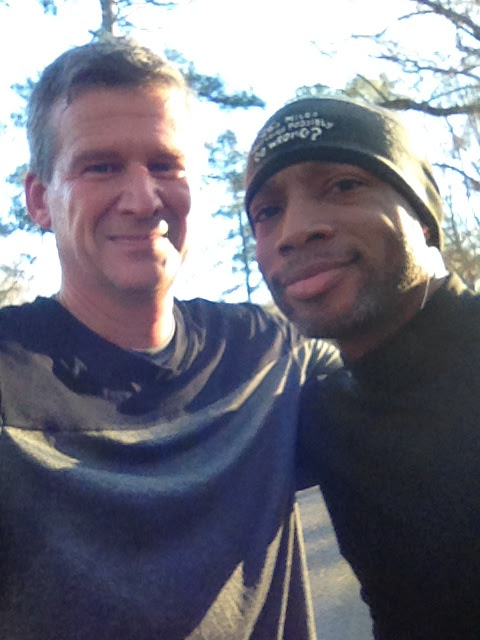
MO and I met while we were single dads, and leaned on each other as we navigated those miles. We are ‘3am friends’ for each other, knowing that whatever time of the day or night, we are there.

Me and MO after a run

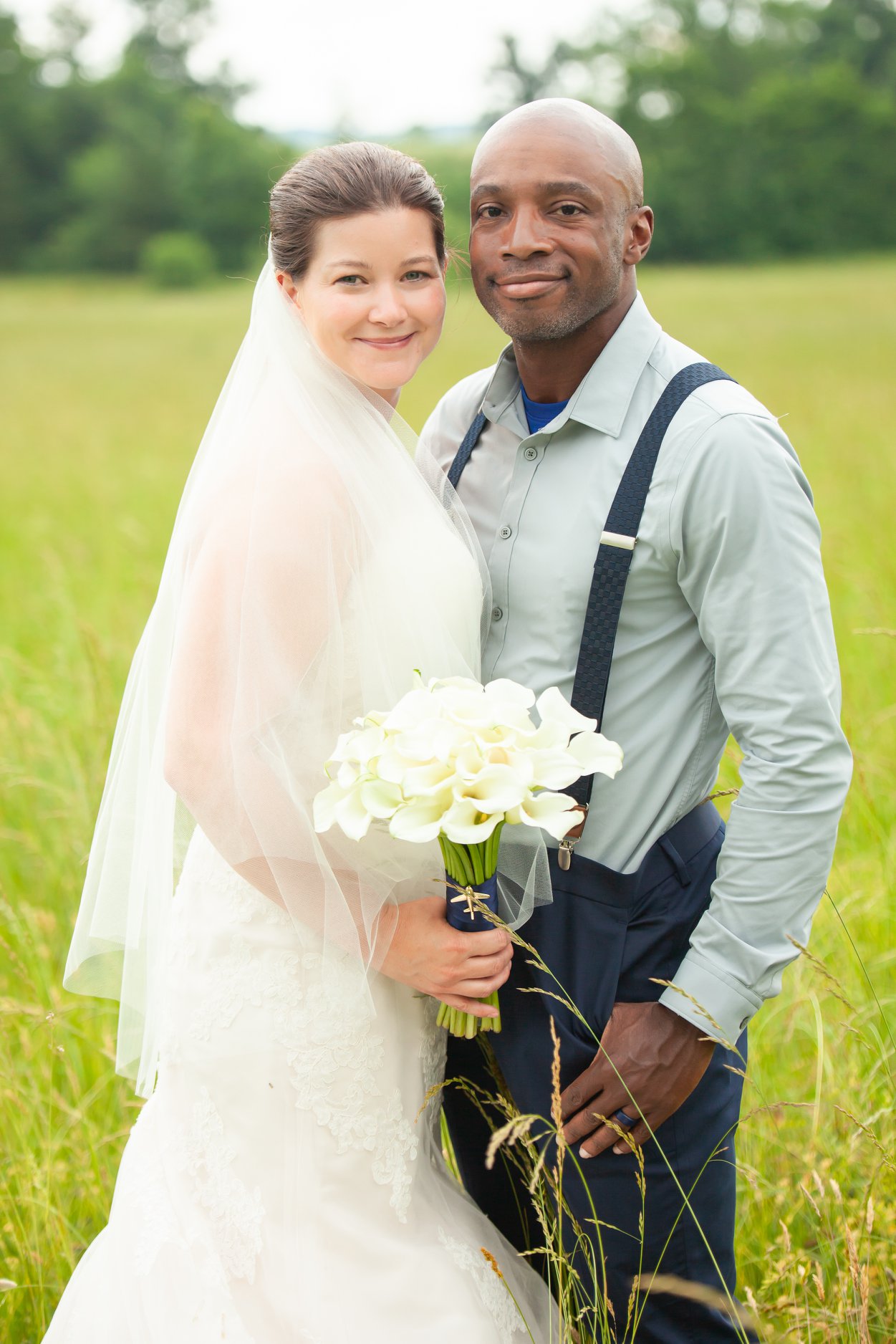
We are both married now and my wife Angela and I were grateful to be able to be with MO and Leah at their wedding in May 2018. He shared that Leah’s parents (Mom and Step Dad) have been very nice to him and welcoming, though her Mom was concerned about what others would say. However her Dad disowned Leah after she married MO, and he does feel to a certain extent some guilt as being the reason she does not have a relationship with her Dad anymore. Again, it is hard to understand yet this is what MO has had to live with and I admire how he rises above it all.

MO and Leah on their wedding day

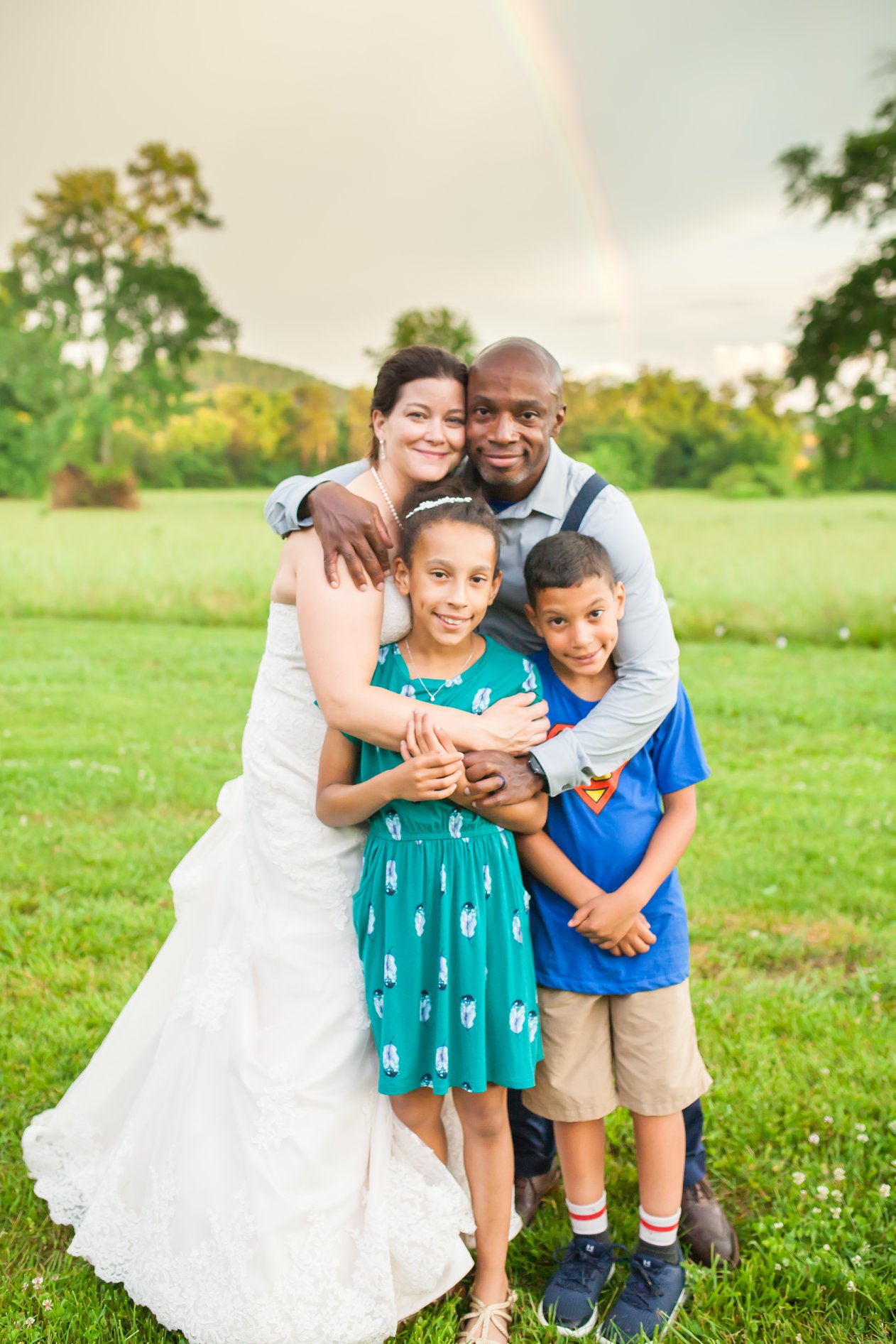
MO also has two kids, MJ and Tate (12 and 10 years old respectively) and they are biracial; Leah adores them. He has strengthened their confidence by teaching them that they don’t have to choose which race to identify with, namely his or their Mother’s and that we respect and treat all as equals, and as for them it is more than fine to identify with both.

When talking with Leah and MO, I learn and grow as a person by becoming more aware and understanding. It has also prompted me to do something, namely have uncomfortable yet heart driven conversations that bring us together.

MO, Leah, MJ, and Tate

Always being mindful of situations, and is he still moving

We had dinner with them earlier this summer, and Leah shared that with MO taking on the challenging of running virtually back and forth across Tennessee (1,243 miles over 4 months), he was up way before dawn kicking asphalt. She would often be up anyway checking his Garmin signal to make sure he is still moving, as a black man running at night may bring unwanted attention.

MO is always having to be mindful of where he is at, at all times, including his own neighborhood. Recently he saw that his neighbors recycling containers had not been taken up from the street and Leah suggested the neighborly thing and take them up for them. He would have welcomed it however he knows if someone sees him do it, they may call the police seeing a black man going up near a house with empty containers. Having to constantly think through these scenarios is something MO is used to, and should not have to be subjected to it. He also knows it has opened his wife’s eyes and it directly impacts her and them as a couple.

So, what it is about race from through MO’s eyes that could help us understand more and bring us together?

MO shared that it is apparent that people do not take the time to understand where each other are coming from with an intent to listen rather than reply. He noted it is easy to call someone a racist and not realize that we all are a product of our environments to a large degree and racism is something that has been taught and conditioned. It can be undone as well, as Nelson Mandela has exemplified. Also, apprehension or fear of the unknown is not racism however, that said, we should not wait until something such as racism directly impacts us to speak out against it.

It is becoming evident that it is more about picking sides rather than having honest conversations, formulating your own opinion, and recognizing that differences are a good thing. BLM (Black Lives Matter) is a message MO agrees with, however he sees that the movement causes division and friction where one has to pick sides. It should not have to be that way. A better position for change is one of inclusiveness, for example it should not be blue lives vs. black lives matter. One can be respectful of both.

I have one of MO’s ‘Run MO’ running shirts, and on the back is a statement that serves him well, and us all, “get comfortable being uncomfortable.” That is what long distance running involves, and is transcending.

What this also says to me is that we should seek discomfort out of our comfort zones as we come together to be in a place of inclusiveness for change.

It involves having heart driven conversations, not with the intent to change minds, rather to understand, share experiences, and improve ourselves. We all are dispositioned to be stuck in our ways, and conversations with an intent to listen sincerely are often lacking, as we are prone to shut down others (many times using emojis and memes) and their line of thinking that does not necessarily line up with our own.

How a Decision to Run a 1 Miler became a 100 miler

It was July 2011, and MO realized that his life was one of inconsistency. Here, there, and everywhere from college through his now adult life as a dad friend, and family member. He ran track in high school and enjoyed the challenge of it, and how it served as mind cleanse. He got up that July day and went for a one mile run, and he was out of gas at the end of it. That was just the beginning of him proving to himself that he could be consistent at something where he did not need to rely on others. It served as a foundation to other aspects of his life.

Now, he has done that one miler 100 times, an 100 miler just last year. Numerous marathons, half marathons, and ultras are the norm. He just completed 1,243 miles over 4 months (over 10 miles per day average). There is no mystery to what he is up to before breakfast. In fact, I know if I try to get in touch with him after 8pm or so, forget it. Everyday, he is up early and out the door.

What has that one decision to go for a run in July 2011 meant? He has learned that in order to be passionate, you have to be consistent; can’t make excuses for yourself; need to be willing to adjust to changes in life; accept criticisms and shortcomings; and just show up everyday. Through his decision to keep running his mindset has toughened, he deals with challenges, setback, and goals with focus and leads through action and example, not words. It is not about having to do it, and all about believing in himself (and ourselves) that we can do it. You choose the ‘it’ you’re presently in or going to do.

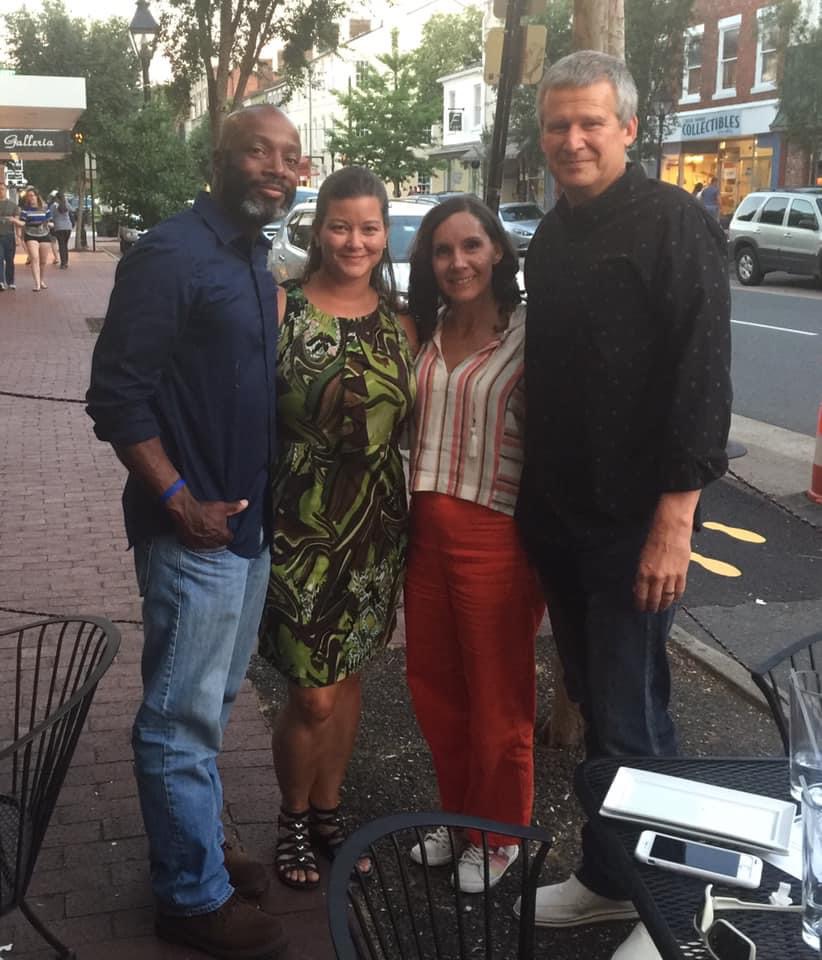
MO and me with our wives, Leah and Angela

Being inspired by the everyday, and it’s contagious. Instead of following who and what people consider famous, why not follow our own hearts? That is what Danny O’Donoghue did when he went to support a marathon and witnessed people from all walks of life supporting cancer awareness and was inspired by them going for 26.2. The elite athletes get the recognition, yet what we need to realize is that we all can achieve amazing and worthwhile goals, embracing all our differences and experiences to get there.

We can all follow MO’s lead, by starting inside ourselves to discover and build strength, not according to other’s expectations, rather to prove it to ourselves. As for Danny O’Donoghue, he is lead singer for a band called The Script, and wrote this song and story from his experience at that marathon to remind us all to stop trying to be famous for the sake of it, be you, and do something great.

That is Hall of Fame speech material.

Reminds me of you and thanks for sharing your life with us MO, and reminding us that we all #bleedasone.

Let’s Carry Each Other

Eddie!!  I knew the voice.  

It was April 2016, Dad and I made a journey back to Singapore together. When we first arrived there in 1975, we were simply hoping for a new tomorrow. We were scarred, and set out to make the best of it as father and son apart from my mom and brother.  

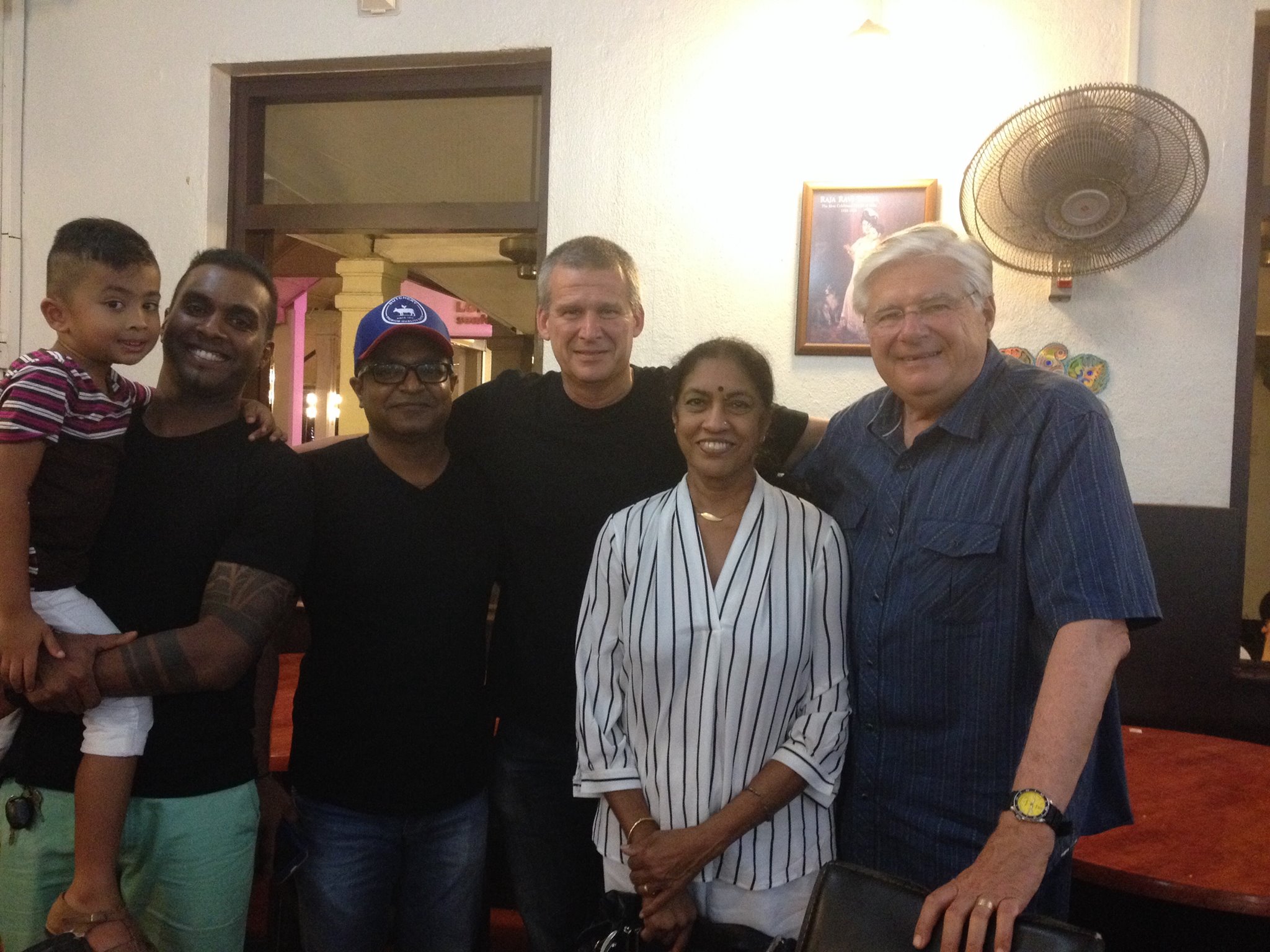
That voice, she has known me a long time, since I was nine to be exact. They are family to us. When we moved to Singapore she took me in as her son as she did with her own, Mohan and Anand, and Anand had not been born yet. It had been a few years since we had seen each other and we are just as comfortable as a family should be; yeah, and we look nothing alike yet we are the same. To Leela I’m still that 9 year old kid, adult sized now, in her eyes. I love it too, as it never ceases to amaze how God works to bring together lives across borders, cultures, and backgrounds to become family. And we are. 

Together again in Singapore

Me and Dad with Leela, Mohan, and Anand (with his son) 

He is always there for me and my Mom.  Our adventures over the years have carved treasured memories in our minds and hearts.  We are as close as our blood runs deep, he and my Mom got married in 1984 and I am truly grateful for my step-dad, I prefer to call him my bonus-dad. Max and I enjoy being around each other, A LOT. He served as a career public school teacher; he is a great builder, teacher, engineer, astronomer, sailor, and craft beer enthusiast. I’ve have learned much from him, the value of patience, desire to always learn, hard work, and being resilient.  Max also makes sure my Mom puts the recyclables, no not in the trash, in the recycling. 

together with Mom and Max

With my wife Angela, my Mom and Bonus-Dad Max

My brother nicknamed him Captain Planet, a superhero no doubt. It is a pleasure to live in the same city as his sister, my Aunt Daphne; a joy to be around her and her family too.  

me and aunt daphne

A visit with Aunt Daphne

The point of all the above is that people may notice that we are not of the same ethnic background. However that is certainly not what defines our relationship, rather it is our love and respect we have for each other, the desire and joy to be together and always looking forward to the next time.

It sure is hard to turn on the news or read much without there being racial divisiveness of some kind.  I find myself asking why can’t good and encouraging news get reported more often?

As I thought about something I could do, I reflected on my own experiences, relationships, and thought how about a place where that stuff is shared? Namely, stories that uplifted us all, from different ethnicities, cultures and backgrounds.  Akin to what John Krasinski did with Some Good News for eight weeks in the spring of 2020 during the COVID quarantine, however for racial unity.    

Rather than statements, which can serve as conversation stoppers, how about roll up the sleeves kind of conversations? It requires willingness to consider the perspectives and experiences of others as more important, in many ways, than your own perspective; unity demands communication, effort, and growth. It involves listening to one another, respecting and honoring one another, and being committed to not shouting down, attempting to silence, or not really listening to each other.  

That is what I want Bleed As One to be about, a place where street names or neighborhoods don’t matter, what we do or where we are from does not matter, and to serve as way to carry each other.  

What I have learned is that truly understanding and relating to friends and family from other cultures, backgrounds, and countries helps me walk in others shoes, and see through others eyes. 

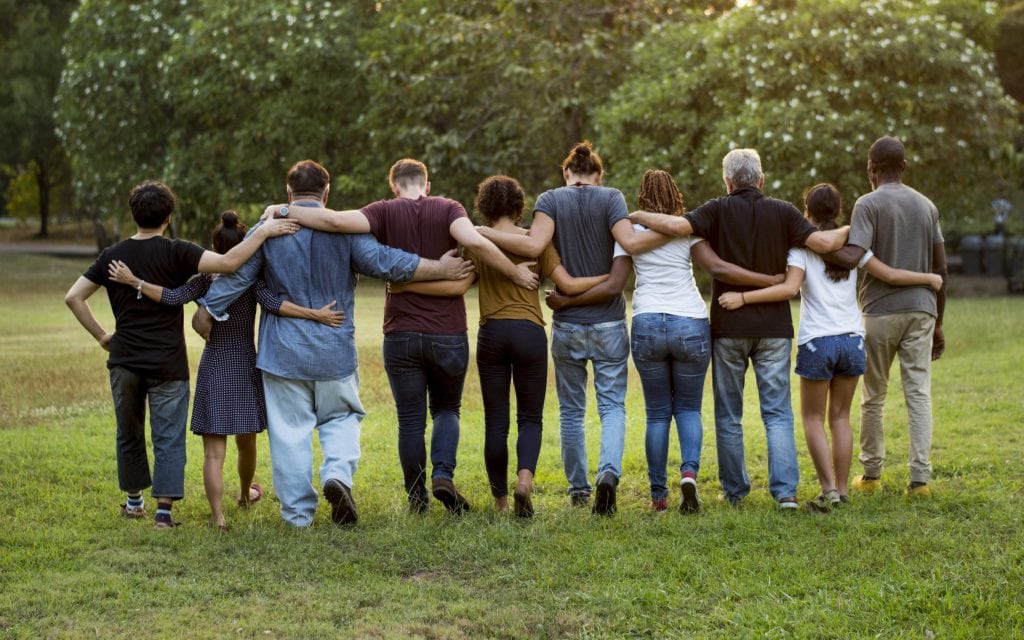
And that is what this is all about; though we are not the same, we are one blood, and have one life with each other. So, let’s carry each other.

Could not find a better way to convey it more powerfully than this:  

Thanks for joining me!

Alone we can do so little, together we can do so much. — Helen Keller

carrying each other

We bleed as one,

Ed