Really? You play the trumpet for President Franklin D. Roosevelt?!
That was likely the first thought bubble that came to John Seagraves mind when the industrious kid was pushing a push mower for Graham Jackson, who had hired him to cut grass and let him know. And you know what, FDR would pick Mr. Jackson up to take him along to Warm Springs, Georgia too. Maybe John thought ‘Yeah, and I’ll dance with Lena Horne one day.’ Though I learned that he did run into the cast of Gone with The Wind at the Ships Ahoy restaurant, where he worked and brought scraps of food home after shifts. At the age of 16, he had a job cutting grass for Mr. Jackson; I am thinking he likely turned the mower off when he heard that about FDR to make sure that is what he heard. After WWII began, Mr. Jackson served a Chief that helped enlist African-Americans into the Navy and John was just about to turn 17.
‘So, John, would you rather grow up in Georgia or see the world?’
It did not take long, on June 27, 1943 he enlisted into the Navy in Atlanta.
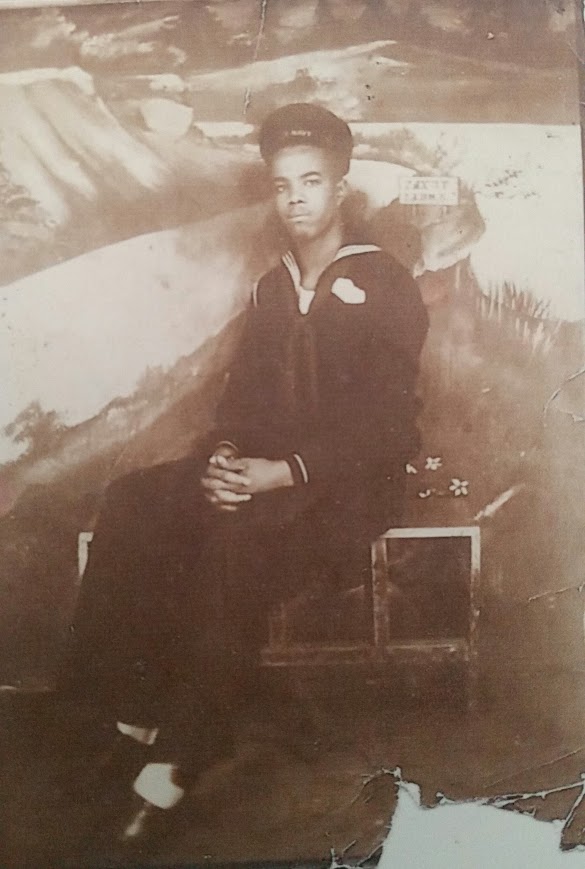
John Seagraves upon joining the Navy 1943
As I learned more about John Seagraves through interviews and talking with his son, I could not help to think that it speaks volumes about someone when everything works against him, he does what is right regardless. His compass does not vary to prevailing winds of the time, rather it holds firm to attributes such as convictions, faith, courage, and love for his family; a steady true north fueled by his purpose and vision. Navigating the times that he lived (1926-2024) involved segregation, racism, being kicked out of diners, fist fights for no other reason than being black, black men were hung by nooses, and yet bravely serving the United States during WWII on the USS North Carolina. His son David said it best; he is the Uncommon Hero who lived as an extraordinary example for all of us.
‘When you find your true north, you discover your authentic self. It’s a combination of your purpose and your beliefs.’ – Bill George
His Hero’s compass pointed towards much the uncommon of his time, namely to have a vision and live life on his terms, to fight for it everyday, to navigate the untamed waters of racism without fear, and to cultivate a strong deep faith and selfless love for others. His WWII service and experiences in the Navy taught him that.
In 2022, we learned the story of Shane Adcock who lived life full throttle and full hearted. In 2023, the story of Chris Cash taught us to always look up and keep ’em flying.
For Memorial Day 2024, I am grateful to share the story of this Uncommon Hero, John Seagraves, whose time as a Steward’s Mate in the Navy transcended his life to encourage all of us. I am thankful for his son, David Seagraves, who shared with me about his Dad and his times with him, and the marketing team at the USS North Carolina Battleship, who provided support and context materials.
“Injustice anywhere is a threat to justice everywhere. We are caught in an inescapable network of mutuality, tied in a single garment of destiny. Whatever affects one directly, affects all indirectly.” – Martin Luther King Jr. (Letter from a Birmingham Jail)
Getting to know his Dad
For David Seagraves, the beginning of getting to know his Dad did not happen until 2009. A reunion on the USS North Carolina in Wilmington that year brought that both his parents attended started the conversations, and brought them closer. They stayed that way until his death earlier this year.
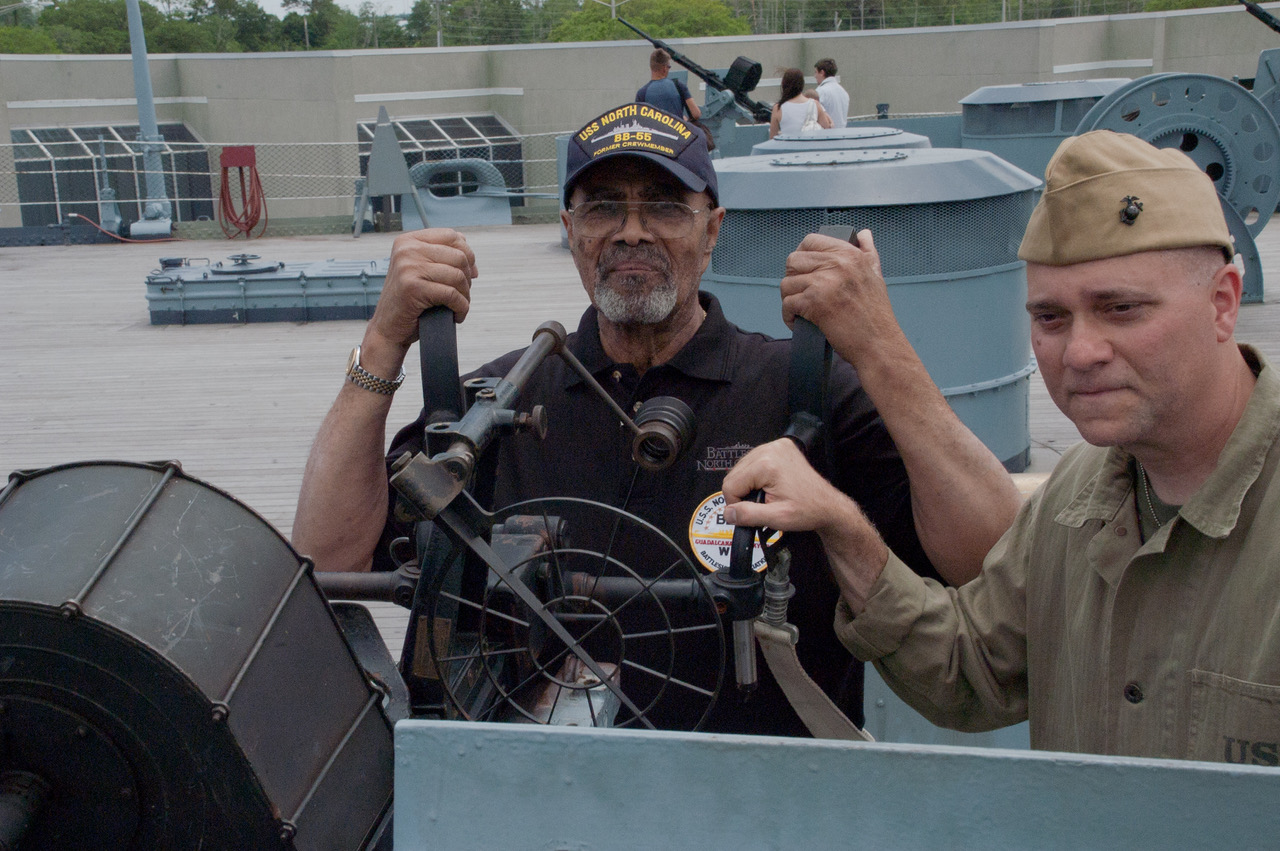
John back on the USS North Carolina in May 2009
David elaborated that “Getting to know Dad was a slow burn, a gradual process. We grew closer over the years. There were still challenges between us as most generational values conflicted. But I grew to respect him more for what he had endured.”
David attended the reunion on the USS North Carolina with his parents in 201
Like many WWII veterans, his Dad did not talk about his experiences and he had no desire either. Why should he? When you look at the situation: he was a black sailor on a ship of predominantly white men during a time of narrow thinking where blacks were subjugated to what whites decided. The Navy historically recruited and staffed Steward’s Mates roles with Filipinos, however with Japan raging war in the Pacific, it was much harder.
An example, at boot camp in Jacksonville, Florida; the segregation in the mess hall with people you would be fighting for and alongside with, seeing German POWs eat (though in a certain section) in the same section with the white sailors. Or when assembling, being told to sit in the back and not stand when the National Anthem was played, after which being sucker-punched by the Chief who stated he never advised not to stand and being punished by marching with full sea bags for an hour before reveille and clean the decks of the barracks with a toothbrush.
Who wouldn’t build up resentment for the way John saw blacks fighting for the US were being treated. Notwithstanding the other times during his childhood in the south before the war that he didn’t want repeated.
The Navy appropriately gave him the choice to stay in Georgia or see the world, and he took them up on the opportunity to take in worldly sights and experiences.
“You may shoot me with your words, you may cut me with your eyes, you may kill me with your hatefulness, But still, like air, I’ll rise…” Maya Angelou
While at the USS North Carolina Battleship reunion in 2009, they wanted to interview him. Going through photos in the archives they had, there was a photo which may have been him, however was unmarked, undated, and required historical details and context. With so few black sailors, the staff on the USS North Carolina Battleship Memorial took a chance it could be John. Bearing some resemblance to him, Kim Simcox and Mary Ames Booker asked if he was the sailor in the photo; he said “Yes!” and proceeded to tell the story why. The story has now been recorded for the archives.
The picture prompted a recommendation for John to tell his story in a book, as he was more willing to have the conversations when he talked about his life during this uncertain and chaotic time of war; David was able to get him to open up.
He learned about his life before and after this defining event, and realized that his Dad was truly a hero, an Uncommon Hero. After the book about his Dad was published and released, David attended the reunion on the USS North Carolina in 2012, as the book became available in the battleship bookstore.
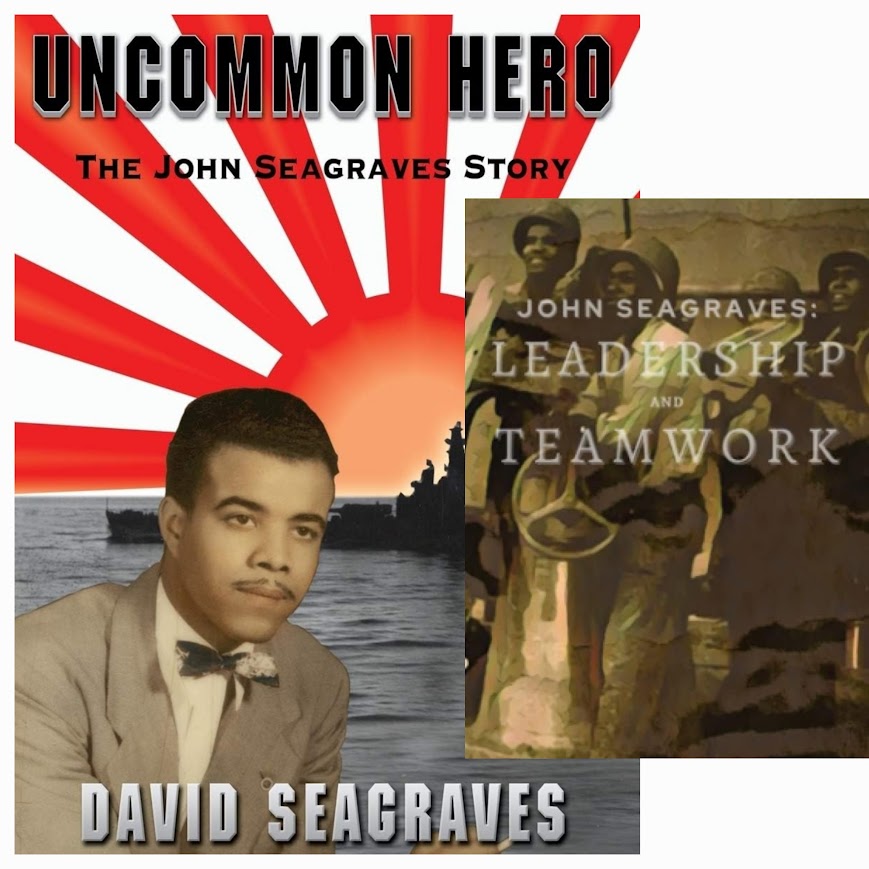
David was able to get to know his Dad, and have conversations never had, by writing Uncommon Hero; the book on the right is by Andrew Wissick, another friend of the USS North Carolina who wrote it for younger students in North Carolina schools and was a good friend of John Seagraves.
John’s three loves in life were cooking/enjoying exotic foods for dining, travel, and playing cards/gambling (something that helped pass the long days and nights on the USS North Carolina). Meals would always bring him back to where he was, certain places and times, and I’m sure each one reinforced a few of his favorite sayings, ‘Happy as a Sunflower’ and ‘Hurry up and take your time.’ Other favorite sayings of his were “I have to tighten up the loose ends’ and as a term of endearment to address men around him, he would often call them ‘Maestro’.
Fighting his way, all the way
“I have learned over the years that when one’s mind is made up, this diminishes fear; knowing what must be done does away with fear.” – Rosa Parks
For John Seagraves, he always needed to fight his way through life. In fact, he was all too willing to fight for what and who he believed in. He was born July 5, 1926 in the town of Griffin, Georgia to his parents Rhunette Johnson and John “Bud” Seagraves. His own father was a WW1 veteran, and a crotchety man. He was accusatory, beat him unnecessarily, and treated John as useless property. Needless to say, they did not get along at all and when his Dad died while he was in the 4th grade, he did not go to his funeral. John dropped out of school in the 4th grade to provide for his family; he saw it as a chance to prove himself and do what he had to do to keep growing. His Mom did get remarried however John loathed his Step Dad for not working, and expecting others to provide for him. This upbringing helps us understand the man he became, one who did not know how to give up, was self-sufficient, and never deterred. He was not going to be ‘anyone’s flunky.’
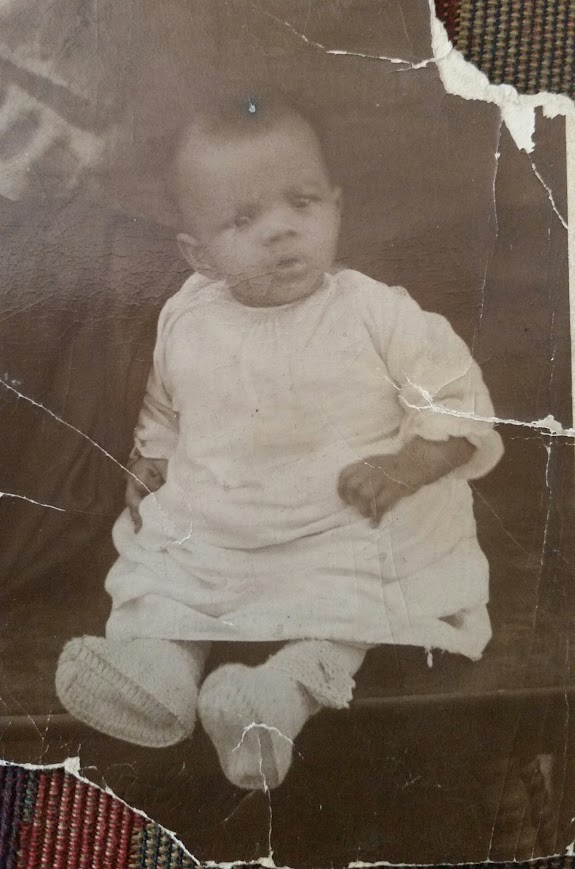
Baby picture of John 1926
While serving in the Navy, going to the brig with bread and water rations meant nothing to John, in fact it was more a badge of honor and standing up for himself and issues much bigger. The brig likely meant some peace and solitude away from the racial disparity and dysfunction of American society.
Consider these examples from his interview in 2009:
- Upon graduation from boot camp, John was advised he was assigned to an officer’s
stateroom at the hotel where his duties would be to shine the officer’s shoes, make his bed, and clean his room. Uh, no. He was adamant that this was not what he signed up for. The Chief told him he had to perform these duties or he would serve five days in the brig on bread and water. Knowing his compass says head ‘true north’, he said he would rather serve five days in the brig than clean an officer’s room and shine shoes. After some contemplation, the Mess Officer thought about it and assigned him to the Scullery washing dishes, however he was deemed insubordinate and they wanted him off the base. As a result, he was transferred to the Receiving Base at Shoemaker, CA.
- John and 3 other African-Americans were on a train to Shoemaker, CA with several stops along the way; they were assigned a segregated train car and when they stopped in Biloxi, MS a brick was thrown through the window of their train car.
- When the USS North Carolina returned to Bremerton, WA for repairs, he was given an early pass to go ashore with seven other Mess Cooks. They went over to Seattle to a club around 1800 hours that catered mostly to African-Americans and advised upon arriving entertainment would not start until 2000 hours. They went to a diner beforehand and upon entry, the waitress advised they did not serve colored people. John stated they had just returned from 87 days at sea and sat down at the counter. Then, the cook came out of the kitchen and told him and his buddies to get out. Once outside the diner, they were so angry about the treatment, they each grabbed a brick and threw them through the windows and ran. They were soon surrounded by members of the Shore Patrol and Military Police, placed in handcuffs and taken back to the ship where they were all placed in the brig. Ultimately, John was told he would not have to stay in the brig overnight. He explained what happened at the diner and the Executive Officer decided to rescind the sentence for all of them. However, they were ordered to do one hour extra duty before reveille for a week and their pay would be deducted to pay restitution for the damage caused at the diner. John’s pay was $60.00 per month, and he sent half of that pay home to his mother. He did not hear anything more about the incident and money was never deducted from his pay.
- While on another stop for the USS North Carolina in Bremerton for repairs, John was sent home on 30-days leave. He took a cross country train to Atlanta, GA. While in Atlanta for a night, he went to concert performed by the Ink Spots and Mills Brothers wearing his Navy dress blues and service ribbons. When the concert ended, he got on a street car to travel to Smyrna, GA where his mother was living at the time. There were three white men, and some other white people, aboard the street car with him. During the trip, one of the three white men came over to him and punched him in the shoulder. He initially did not do anything in return. Another one of the white men came back to him, and this time he fought the two men. The third white man went to the street car conductor and advised that Mr. Seagraves was being a trouble maker. The conductor stopped the street car, called him names, and told him to get off. He got off the street car, and he had about four or five miles to walk along the track before he got to his mother’s house. Once he got home, he told his mother he would never live in Georgia once he was discharged from the Navy; he came to the realization that he needed to leave the south because he would kill somebody or be killed.
There is a highlight to the above, and that is meeting celebrity and singer Lena Horne. On the trip to Shoemaker, CA they stopped in Los Angeles and were taken to a USO Canteen, and Lena Horne was there. John was able to dance with her and he asked if she could send him a signed picture of herself to his PO address. About two months later, there is was…a treasured evening captured in time.
One of the issues that John noted was that when on liberty in Pearl Harbor, he never experienced any prejudice against African-Americans, the places he experienced it was in Seattle and Georgia.
It is evident that John was a brave man, and he navigated these waters without fear. At the age of 17/18 he was learning things that would carry him the rest of his life and as I write this, the more I understand looking through his eyes, and am grateful to learn of his story.
After the war, he moved to the Northeast, got married to his wife of 69 years, Mildred, and raised his family in Boston. He did go back to Georgia in 1980 as much had changed since his time growing up there.
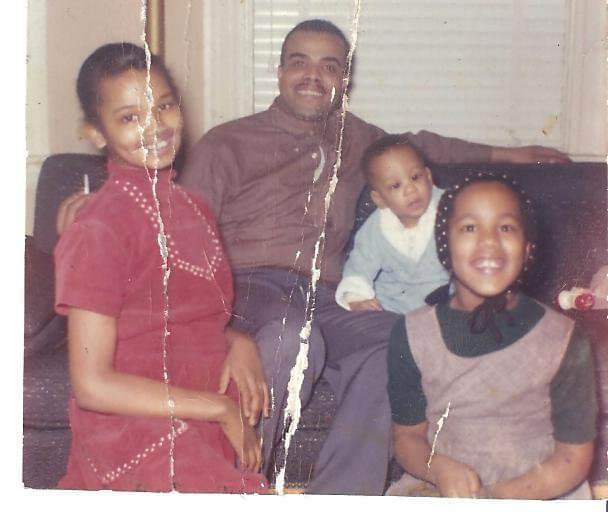
Post WWII, John with this 3 children Patricia, Linda, and David
How about a 20mm Gun Mount to go with breakfast?
“It is not by muscle, speed, or physical dexterity that great things are achieved, but by reflection, force of character, and judgment.” — Marcus Tullius Cicero
One of John’s loves was cooking, and he did it well. The Navy finally realized his gift and after reporting for duty in the South Pacific to the USS North Carolina and being assigned to take care of an officer’s stateroom, he refused and was placed in the brig for one day. The next day, he was assigned to the galley and cooking breakfast, and soon thereafter was cooking for the XO (Executive Officer) and all the officers. His soon realized that his quality of meals improved as the quality of life in who he served; he received more favorable treatment.
It seems the Navy scratched some itches for him, the ability to travel (though in a war zone), cooking, and playing cards during down time. What was not on the docket was being a Gunner for the first of two 4-man gun crews, which came about in an unexpected way. After a fist fight with another sailor while on extra duty polishing silver (with silver polish all over the floor) in an officer’s wardroom, an Executive Officer (Cdr. Stryker – could not have thought up a better name) came through. Knowing John was a cook for him, he did not do anything though they realized they could have easily been punished. You know that saying if you don’t ask, the answer is always ‘no’…after this incident John asked Commander Stryker if the black sailors could be assigned the the 40mm or 20mm guns on deck. After a conversation with the Gunnery Officer and some training, their eight man crew was on the 20mm guns. John served on the starboard side as a gunner and loader.
John Seagraves became the first African-American to man a 20mm gun, and there are generations of families on that ship that are grateful that he did.
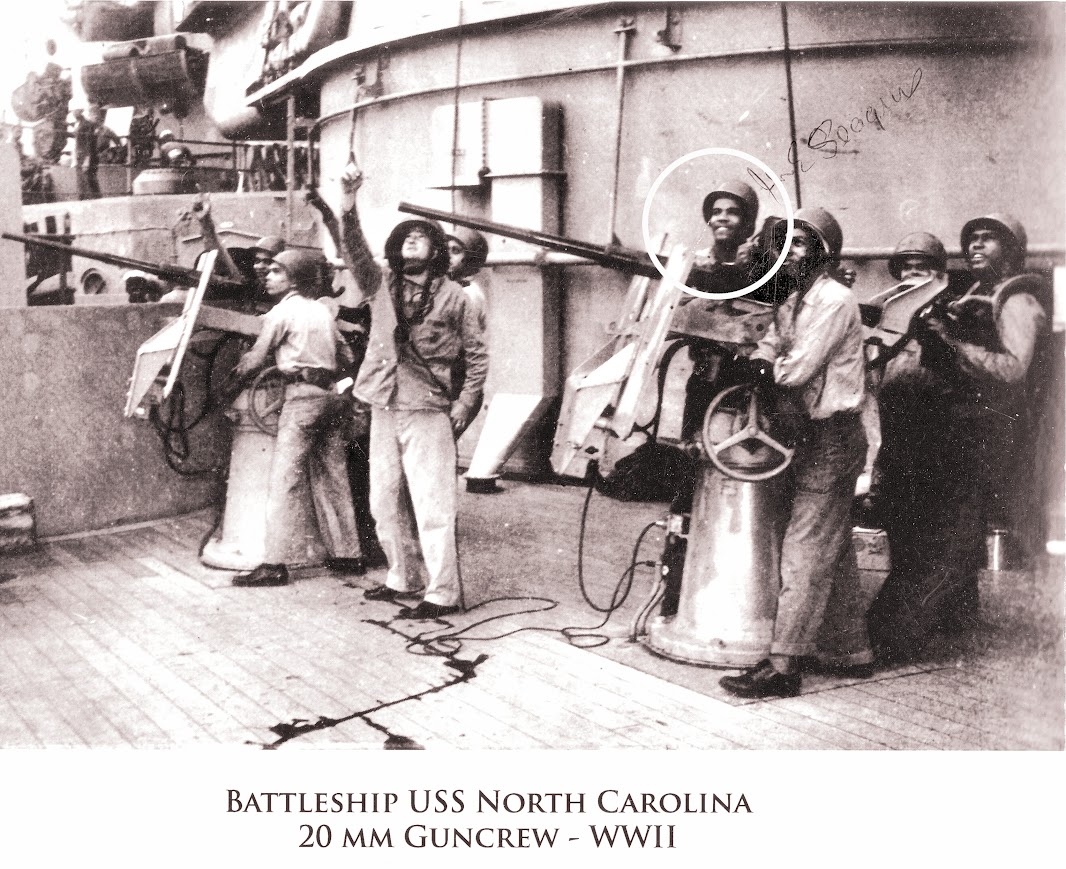
John (circled) and his crew manning the 20mm
It was April 14, 1945. The USS North Carolina was in the South China Sea, near Okinawa and part of a task force with three aircraft carriers. During a Japanese air attack, a kamikaze struck the USS Franklin and John could see crew members and pieces of aircraft thrown into the ocean. The USS North Carolina could not stop however they attempted to save as many of the overboard crew members as possible.
What happened next was what these men were ready for, next thing they knew a Japanese Bomber (Mitsubishi Navy Type 1 Attack Bomber – known as Betty) was headed straight for the their battleship. He could see the two pilots in the cockpit as they kept firing all they had, as were those manning the 40mm guns. Next thing they know it missed them and crashed into the sea, exploding. As I learned from his son David, that plane was so close to the Captain’s bridge and deck it would have certainly ended many lives that day. It would have taken a direct hit, John and his crew made sure that did not happen. As he describes it in his book about his Dad:
“On April 14, 1945, the 18-year-old sailor and his gun crew defended the ship from an attack which caught everyone else by surprise. Being the first gun group to spot and target a kamikaze plane headed directly toward them, John fired upon the deadly plane, downing the aircraft just 30 feet from the battleship. This isolated act saved untold lives and the ship’s legacy under the most severe circumstances.“
There are generations of families alive today because of those men, and we all should express our respects and honor; for their fortitude in this battle and all the ones on and off the ship that preceded it.
God bless you all.
He can cook, he can sing, he can do anything…
“There is nothing more calming in difficult moments than knowing there is someone fighting with you.” – Mother Teresa
The war ended soon thereafter and as the USS North Carolina made its way to Pearl Harbor, the Panama Canal, Boston Harbor, and finally Brooklyn Navy Yard I can’t imagine the mixed emotions John was feeling. They had won the war, however he needed to go home to a place that was not welcoming to African-Americans. He had served his country with bravery, honor, courage, fortitude and for those who have seen the dystopian series The Man in the High Castle, this country and the world would be much different had the biggest ‘what if’ of modern history happened.
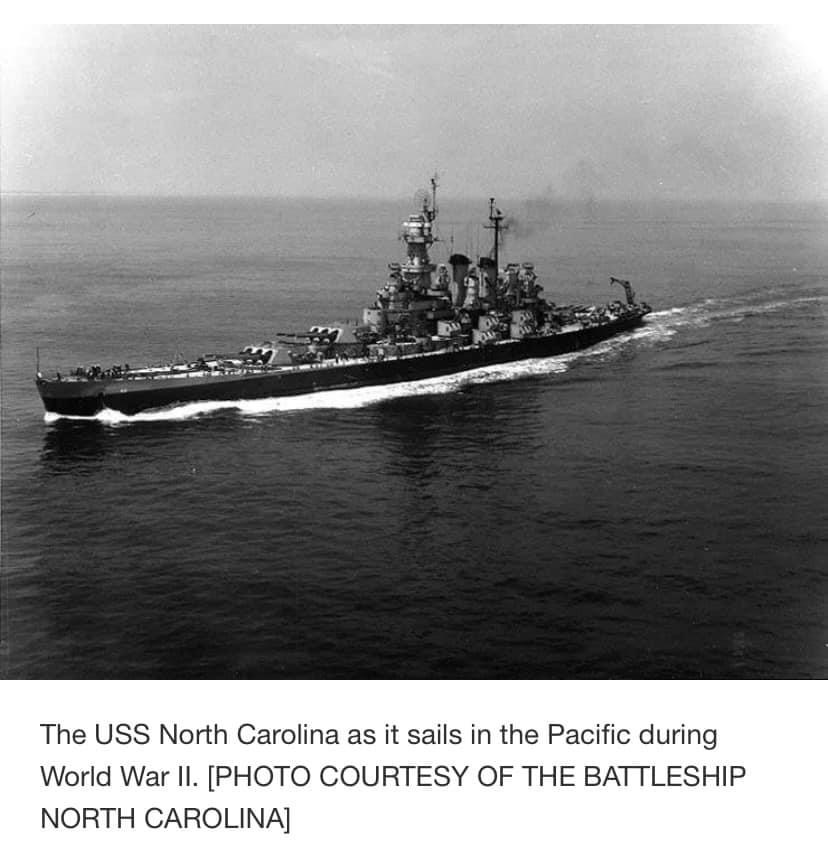
John kept a model of the USS North Carolina at home as a reminder of his battles, on and off the ship.
John was discharged from the Navy on December 19, 1945 and kept his promise of not returning to Georgia. Instead, after a three month stay in New York (and met Harry Belafonte), he moved and settled in Boston where he lived for 40 years. He knew what he wanted and as always, he would fight for it.
John had a strong faith and was a devout God-fearing man. I believe that is what got him through his many trials and tribulations due to his skin color, where most of us would not have to face them in the first place. That strong faith led him to a new church in Boston, and he decided to join the choir. It was there he met Mildred, and in 1949 they created their own chorus and married. I am sure she enjoyed his cooking too.
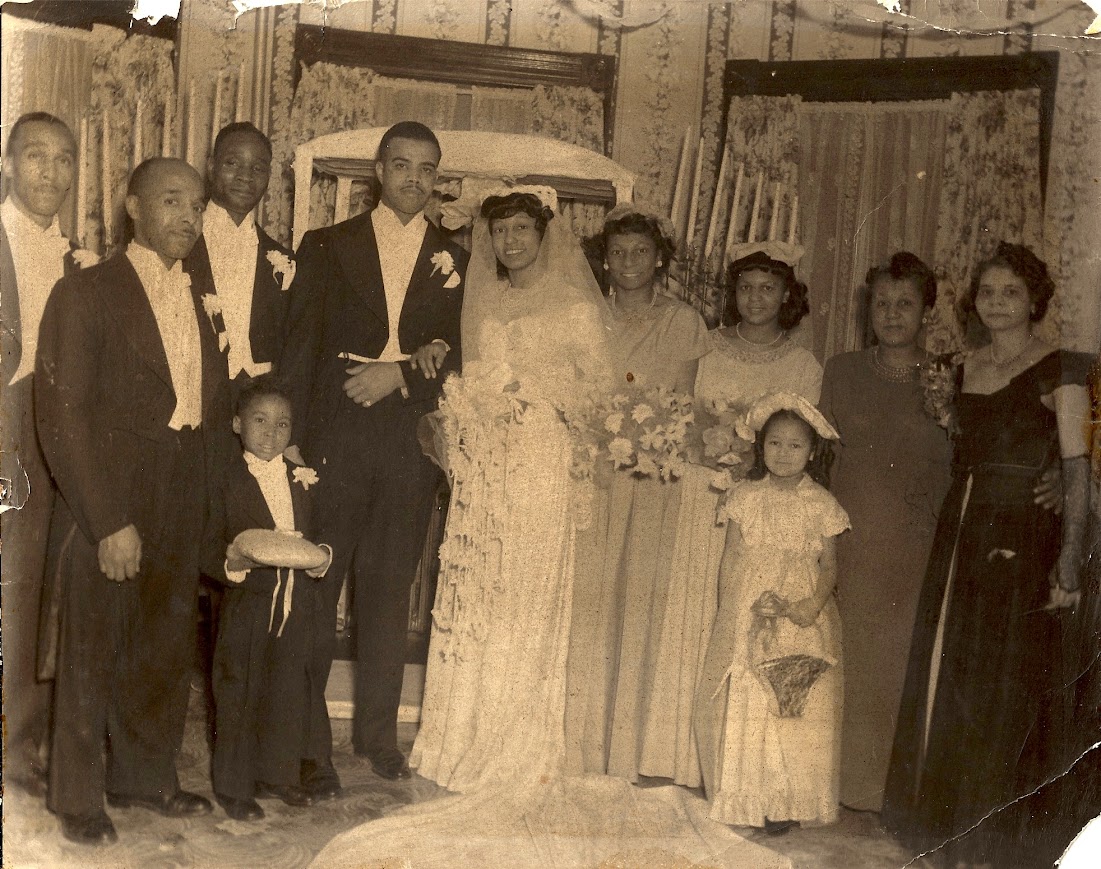
John and Mildred Seagraves, Wedding Day 1949
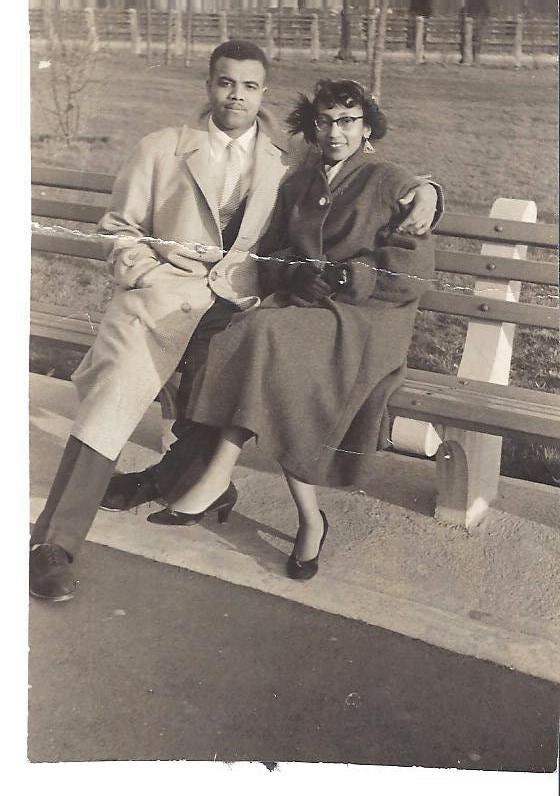
Enjoying some time together outdoors
John and Mildred had three children; Patricia, Linda, and David. John loved being around his family and friends, and through his love of food and cooking he built a life, freedom, economic opportunities and fueled his joy of travel. Though he lost his first restaurant with his partners took money, he remained steadfast and unflappable. He then started a food service business which included three service contracts with the Navy and the University of Massachusetts. When told or assumed that he could not do something, he was consistent throughout his life of accepting the challenge and proving all wrong; happy as a sunflower and, going with another one of his sayings…leaving any detractors out ‘colder than a well-diggers a**’.
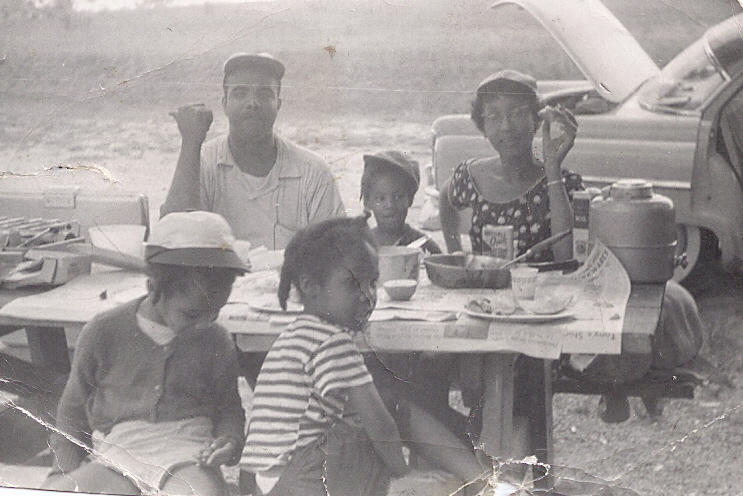
Seagraves Family Road Trip
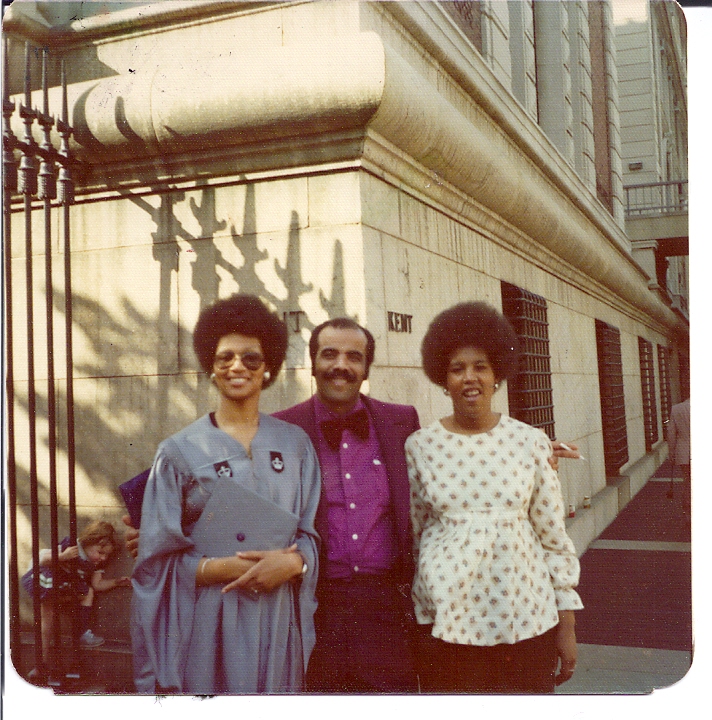
At Patricia’s graduation from Columbia University
David had a front row seat to his Mom and Dad, they were married 69 years. He shared though his Dad was not the nurturing type, his presence was always felt and encouraged him to venture from the familiar, even when ordering a cheeseburger; John loved Chinse food! Same goes for David and getting his Dad to venture out. He played Ice Hockey in Boston and when his Dad went to one of his games, asked why he was skating on horse shoes. In fact, he was an excellent all-star caliber player in Boston and when I asked about racism he experienced growing up, the memories are vivid.
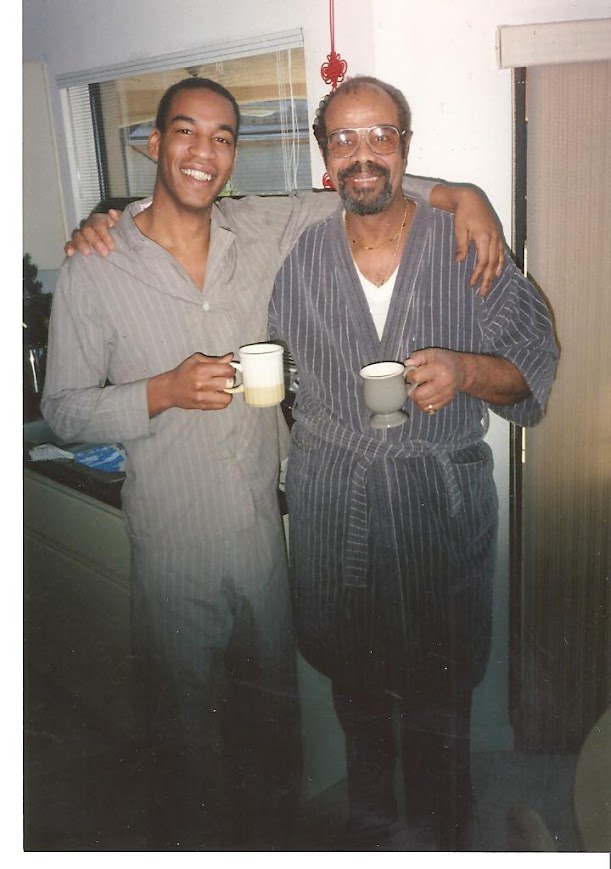
David with his Dad, the Uncommon Hero
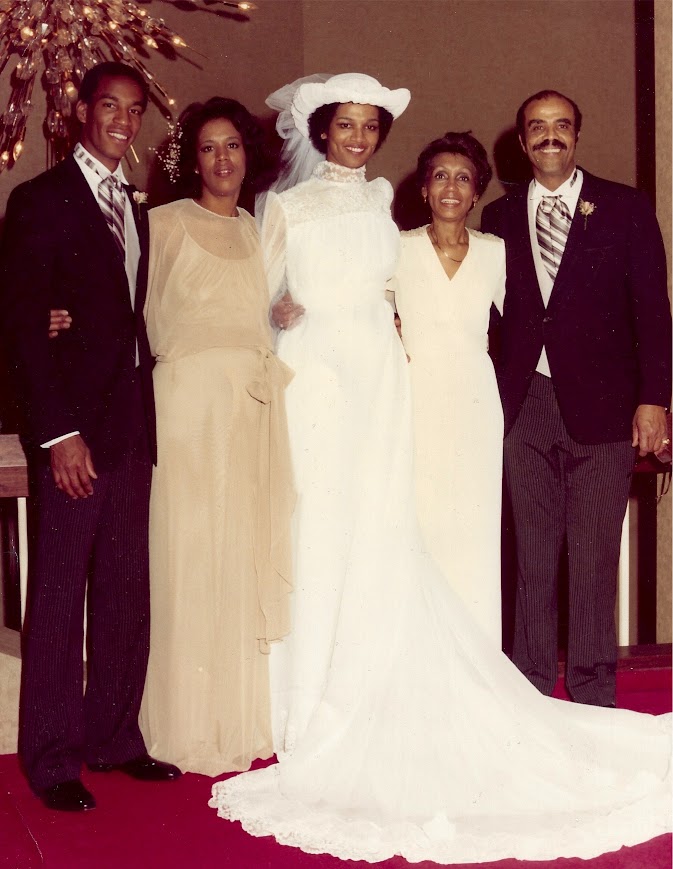
A family snapshot at daughter Patricia’s wedding
There was Hockey All-Star team, a white parent called a decision maker and he was left off the team because somebody’s kid took his spot, both he and his teammates dumbfounded. He witnessed the court ordered desegregation of Boston public schools and compulsory busing, which led to racial protests and riots. He was able to navigate these times using his father’s compass, and had a vast and diverse network of friends from all cultures along by his side. When he was a senior in high school, he got in his car and was backing out of his parking space when a member of a construction crew working on campus and in a Corvette raced out of there and almost hit him. They both got out of their cars, and the Corvette student was getting heated with David. Then along came Dicky Clasby (an Irish Catholic) who was walking across the quad and saw what happened; he said to the Corvette guy he would punch him in the face if he tried anything with David. That both escalated and ended quickly. Racism was felt all through David’s school years, from Milton Academy, to Princeton, to Colorado College and he had a Dad that had navigated it before, and he could use his true north compass anytime.

All together with granddaughter MacKenzie on the far left
After 40 years in Boston, with all three kids grown and out of the house, John moved back to Georgia in 1980. The south had changed since his childhood and Navy years, and Atlanta had become more diverse. He ran a food catering business for eight years that served the Atlanta Civic Center and the City Hall cafeteria. At the Civic Center, the business served a variety of celebrities and shows, including the Metropolitan Opera.
After that eight year contract expired, he opened Southern Vittles in the Atlanta Underground and Captain John’s Seafood in East Point before another partnership malfeasance led him to the opening on October 18, 1988, of John’s Fine Food, a legacy that still stands today, run by David. The clients they have served is impressive, during their 69 years of marriage, John and Mildred Seagraves served countless celebrities, dignitaries, government officials, international events and Fortune 500 companies.
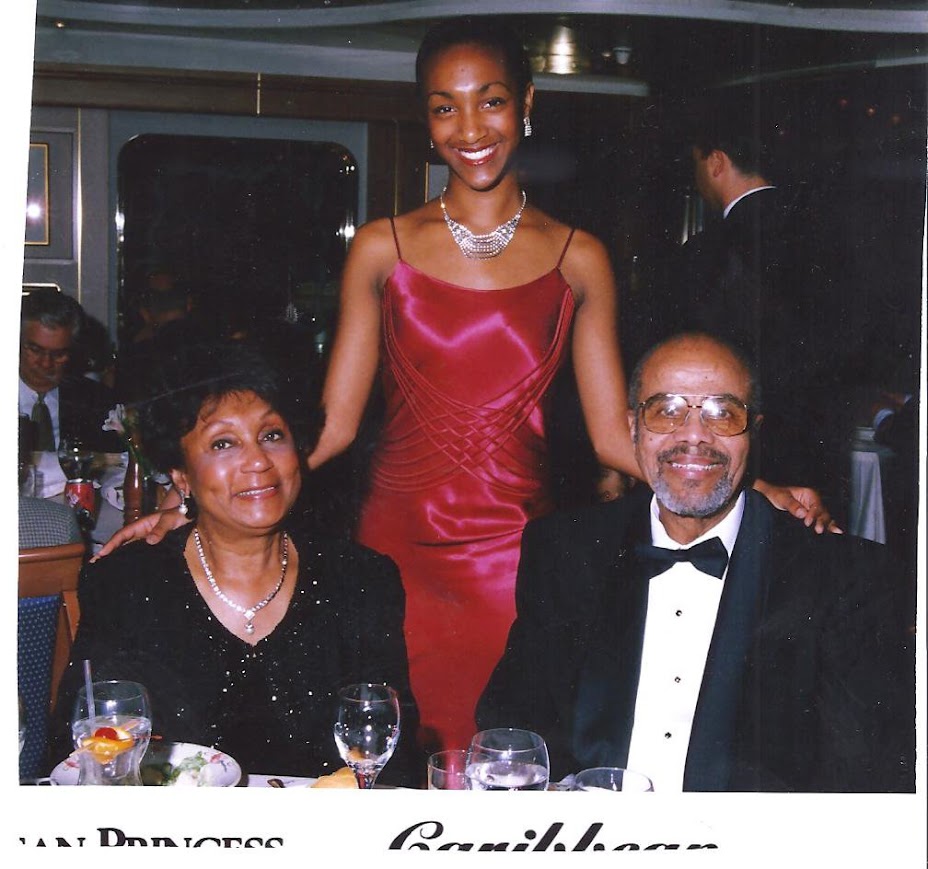
John and Mildred loved cruises
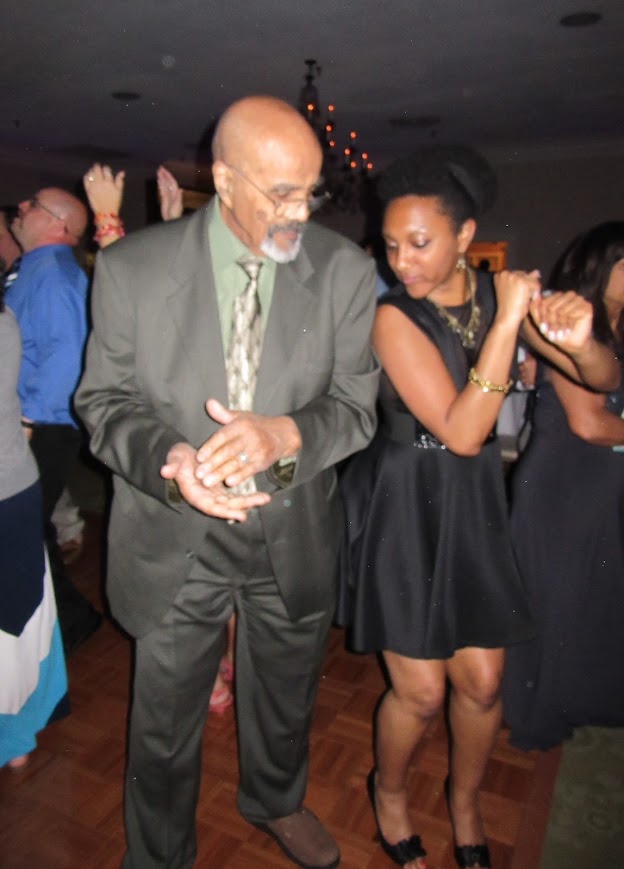
He still got the moves, with granddaughter MacKenzie
In talking with David about racism playing out in our communities and country today, we both agreed it is not playing out well. We are divided by politics, extremism, and a culture tainted by bias and injustice. It is emotionally driven with passing, uniformed judgements, and being judged where nobody gets an even shot. I know after we talked about his Dad, his experiences as his son, and his love for him, I know we have so much more in common and it simply reinforced why I enjoy these conversations and learning through others.
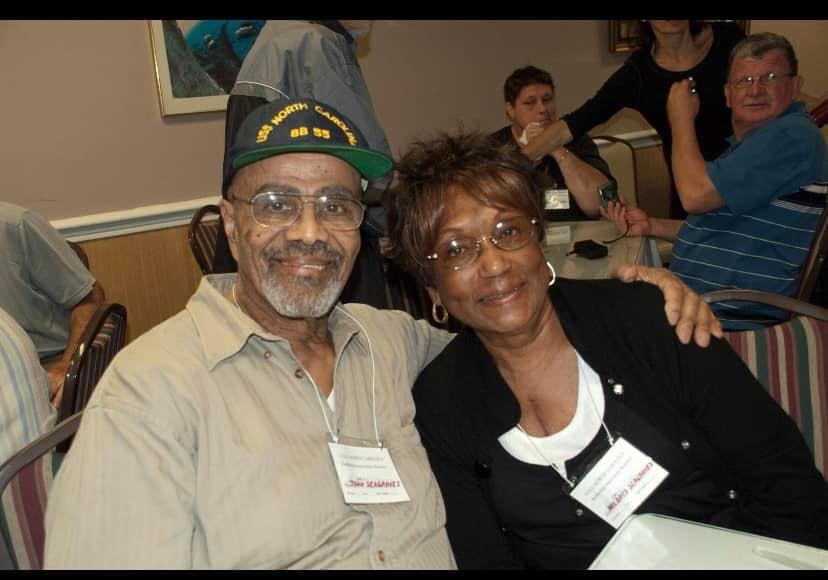
John and Mildred at USS North Carolina Reunion May 2009
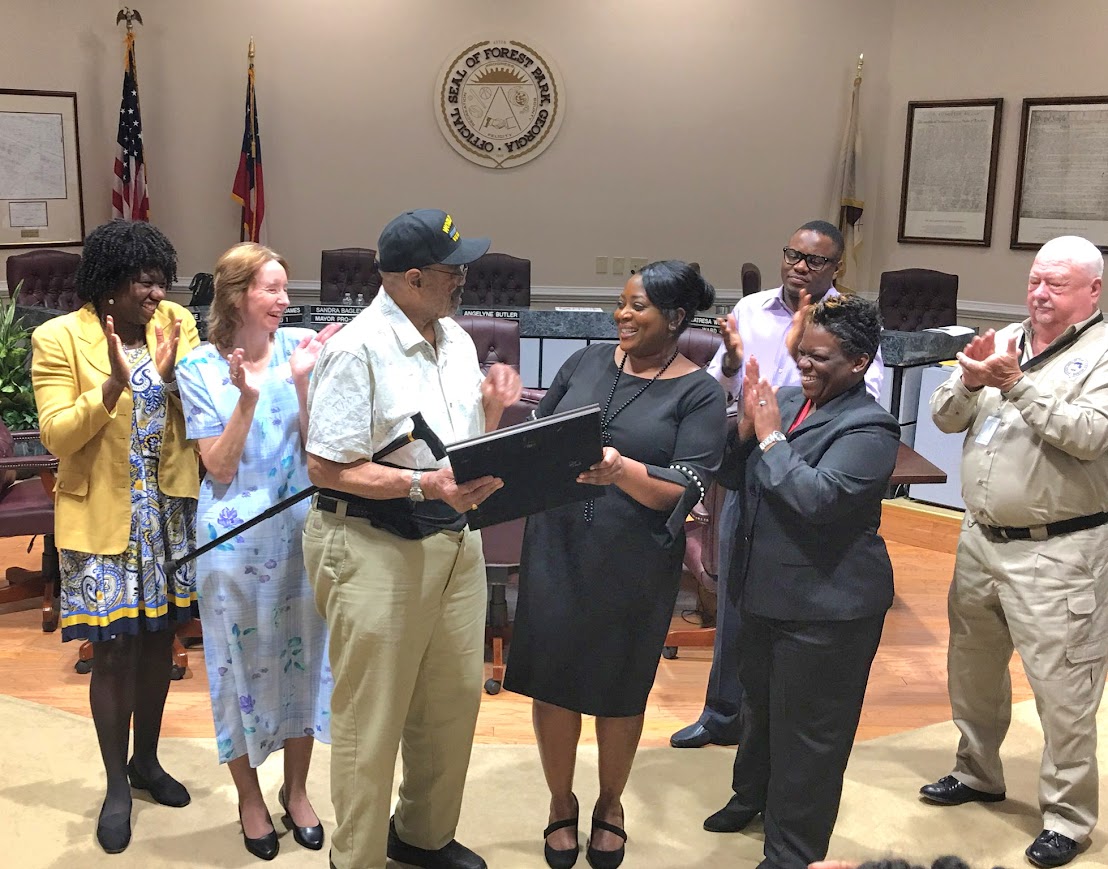
City of Forest Park, GA awards John honor of being longstanding small business owner for John’s Fine Food
It’s OK to stop fighting John
“God’s dream is that you and I are all of us will realize that we are family, that we are made for togetherness, for goodness, and for compassion.” – Desmond Tutu
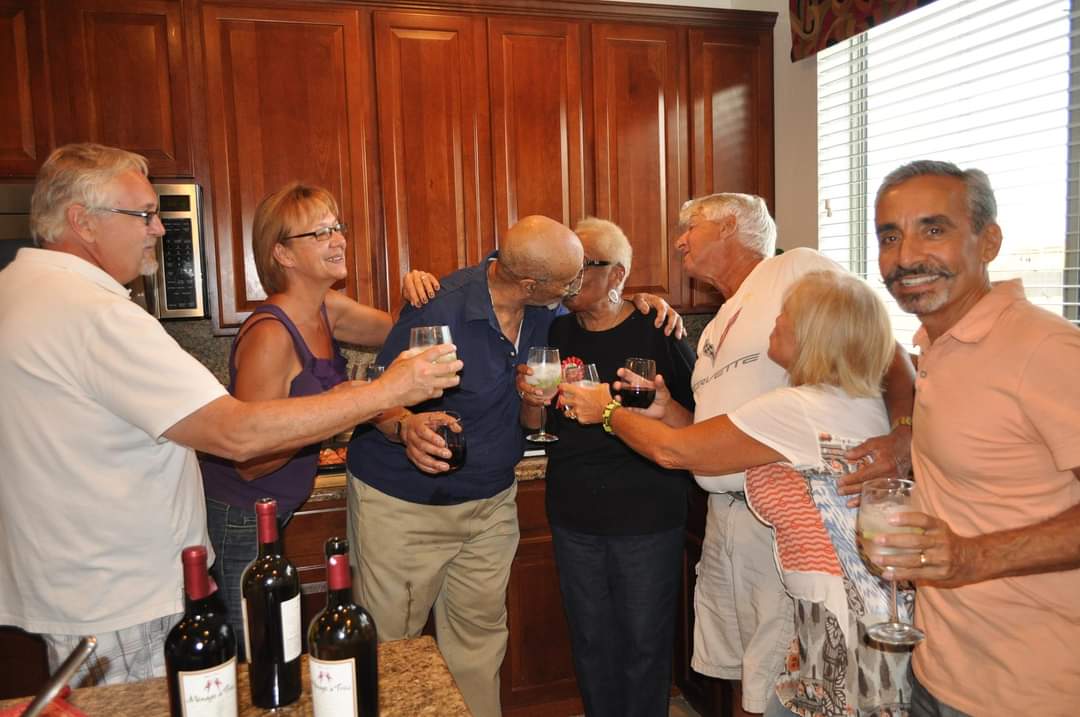
Cheers to their Wedding Anniversary
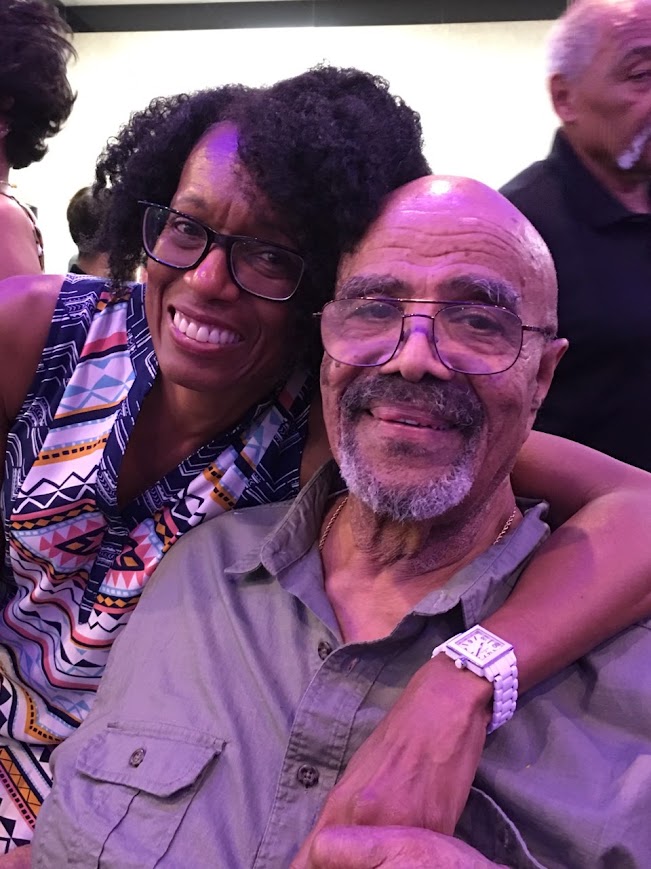
With niece Karen Johnson-Young
John and Mildred moved to Phoenix in August 2007, and attempted to retire. Much to Mildred’s chagrin, they were remote business owners as Mildred did the accounting for John’s Fine Food and John spent most of his time on the phone with the business and extended family, shopping for dinner, and planning their next trip.
Mildred passed away on July 22, 2018.
When talking with David about his last times with his Dad, it was heartwarming and comforting, as much as it hurt to say ‘goodbye.’ The love John had for his family, friends, and fellow Navy servicemen was exemplified throughout his life. He always took the high road, and humbly leaned into heroism, bravery, and courage. He was a survivor of irrational racial hatred and a war that saved the trajectory of the world. He voluntarily supported and defended others during a time of segregation, and nobody was going to deny him to live his life and thrive, his way. John did not know how to give up, the Navy taught him that.
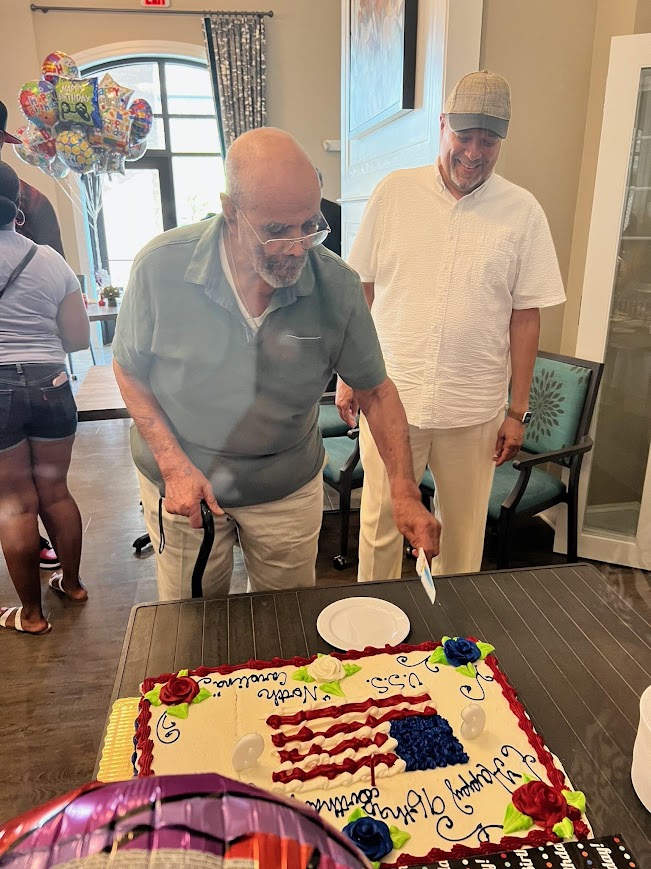
Birthday Cake?! You bet I want a piece of this!
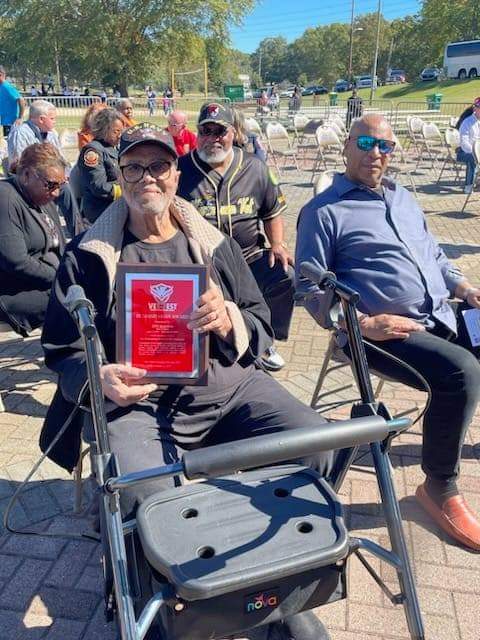
John receiving a Veteran’s Award for his service in WWII at Vet Fest
People in the active over-55 apartment community heard him talking to his wife, Mildred, who passed away almost 6 years prior. John had a very attentive neighbor across the hall, several community friends, and eventually 24/7 care from the beginning of 2024 until his passing on April 1st.
David last saw him Easter Sunday, 2024. A fitting last day to see his Dad, they were happy to see each other. They had discussed the restaurant and keeping it going in February and John wanted to have a birthday celebration to celebrate his son’s 65th birthday.
Though John was in and out of sleep, he brought his favorite Chinese food dish for him to enjoy. John was also randomly calling people that week as he likely knew time was getting near.
He did not know what to do with the furniture and seeing it was his nature to fight to live, Mildred must have let him know it’s OK to stop and let’s be together again. After David left and stopped to see some friends, he walked in the door and no sooner got his keys out of his pocket then got a call that he was not breathing.
They all knew it was time, the Uncommon Hero was on the voyage to his ultimate true north.
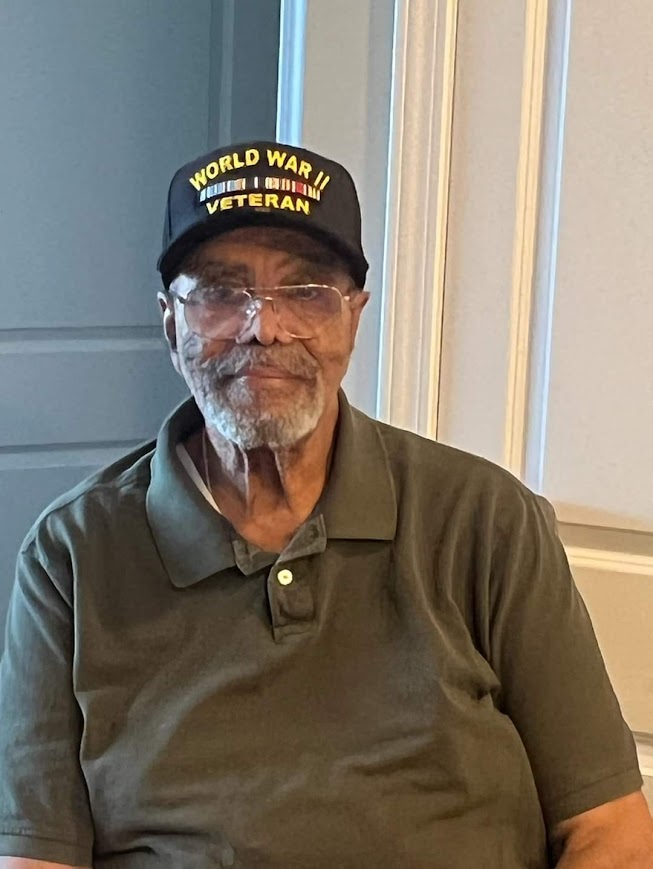
Thank you John…what a life well lived
Now, about that time seeing Lena Horne…
John loved his music, all the greats. He and Mildred loved the hits of the 70s and on from Duke Ellington and Earl “Father” Hines on a jazz cruise to classic performers Ella Fitzgerald, Aretha Franklin, Diana Ross, Ray Charles, Harry Belafonte, Marvin Gaye, Curtis Mayfield, Lou Rawls, Tom Jones, Al Green, Celine Dion, Whitney Houston, and Stevie Wonder. After I learned this I pulled up many of the above to listen to their voices and hear them play again; YouTube can serve as a treasured time capsule for music.
I have thoroughly enjoyed spending this time getting to know John Seagraves. As I have stated to many, when I write I envision it as spending time with them, even those who have graced our presence and no longer with us on earth. As I look at the pictures above, what a highlight reel of a life well lived; a hard fought one that encouraged and strengthened many, a life lived beyond himself to carve a name on many hearts…including mine.
With his love for music the travels that helped shape him, I wanted to leave something here that exemplified him and would resonate for all of us. John Seagraves was a man of self-belief and resilience, he was also determined to forge a better future for himself, his family, and others than the one he experienced as a child and young adult.
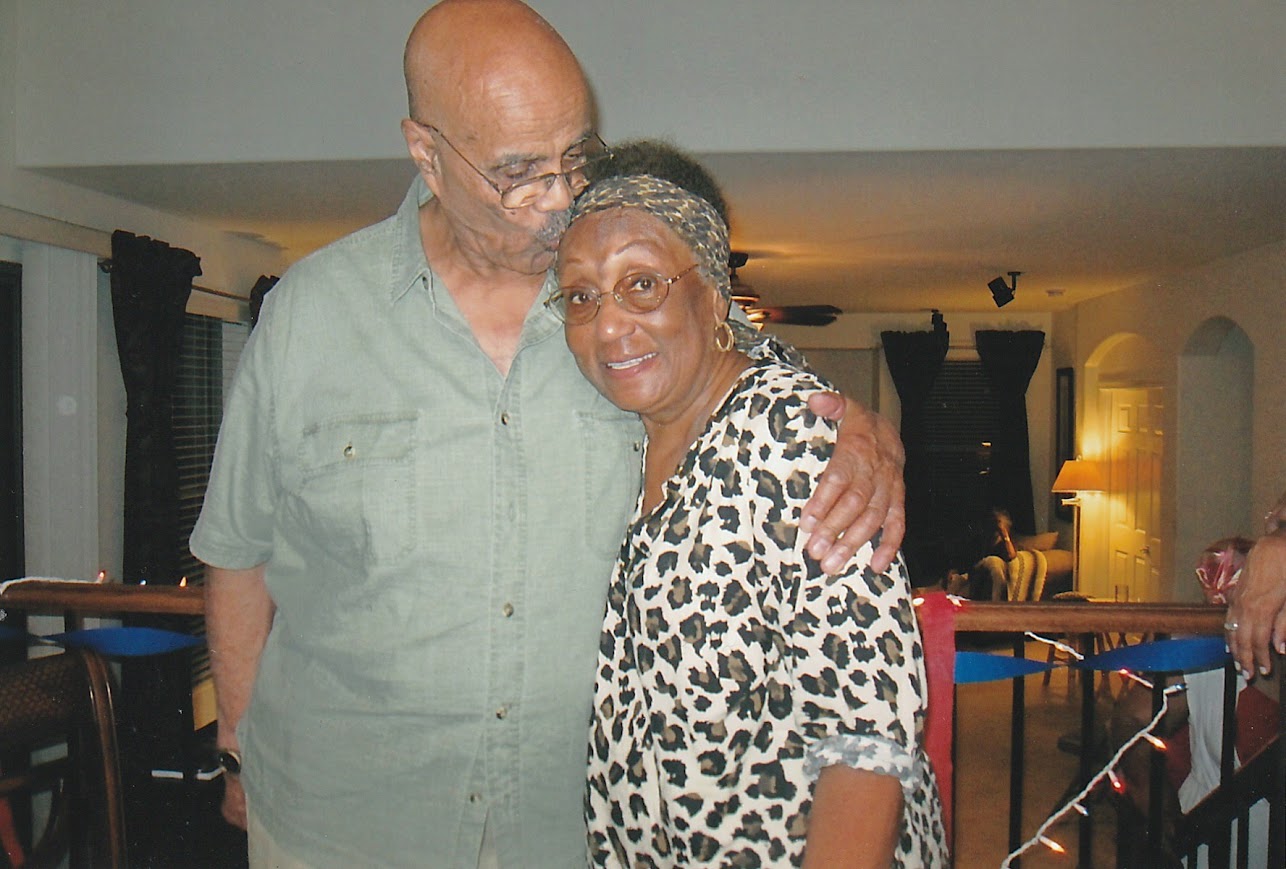
Love always…protects, trusts, hopes, perseveres, bears all things, believes all things, hopes all things, endures all things…Love never fails. They are together again.
It is evident to me that John’s strong Christian faith reinforced importance of having faith in our own abilities and never giving up, even when faced with challenges. His Hero’s Compass pointed towards True North at all times and encourages us to embrace our authentic selves and the inherent strength within us. Each one of us has the potential to achieve greatness and the ability to overcome any hardships, troubles, and obstacles that life brings.
I wanted to take us all back to the USO Canteen in Los Angeles where John was in transit route to being deployed for WWII and got to meet and dance with this legacy herself…what a life well lived John and thank you.
God bless, thank you for your service, and may we honor your memory.
Ed Deiss

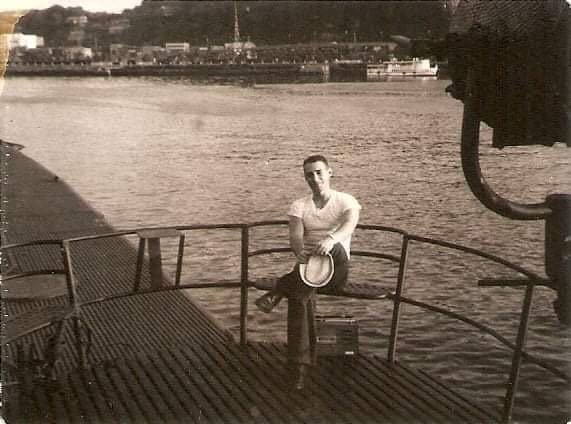

 Bleed As One