There were long periods where he did not see the sun, the most being 128 days. That is what to expect serving in the US Navy on a submarine. Yet, Sid Busch would not let the confined spaces and lack of roads get in the way of running. So, what did he do? Ran around the missile compartment 239 times to complete a half marathon! We are all grateful his elbow did not accidently depress one of the buttons in there either. For long distance runners, we always treasure the scenery whether on roads or trails; submarines can provide unique opportunities and having run marathons all over the world, one thing Sid wanted to do was run around the world. With his submarine having surfaced at the North Pole, Sid got out to see the sky and ran around the pole, thus running around the world at the top of the world.
20,000 Leagues Under the Sea in Brooklyn
Sid’s love for submarines started early, growing up in Brooklyn, NY, and he blames Walt Disney. He was born in April of 1946 and raised in Brooklyn, NY, Flatbush Ave and Ebbets Field. His Dad Jacob (who went by Jack and was colorblind, thus could not serve in the armed forces) served as a welder at the Naval Shipyard and his Mom, Ada, was a nurse who assisted doctors on house calls. Unfortunately, his Dad got injured and needed to be retrained, and his Mom became a teacher. With Sid’s older brother Peter, they never longed for anything, nor ever knew they were poor, they were rich as a family in their love for each other.
“They lived comfortably and it was a good life they had…happy and full of small adventures. And they were so young and loved each other so much.” – A Tree Grows in Brooklyn (Betty Smith)
Sid’s decision to join the navy and be on a submarine can be traced back to Walt Disney and the movie 20,000 Leagues Under the Sea, which was released in 1954 when he was 8 years old. At night when going to bed, he would climb on his bunk bed and pretend he was getting on the Nautilus. He thought subs were cool and would make cardboard models of them at home. As Sid went through his high school years (George Wingate High School), he made the wrestling team and after school was found often playing stickball in the streets. He had friends from all races and backgrounds on Flatbush Avenue, with his best friend being Clayton McFarland, whose family had moved to New York from Greenville, South Carolina. Sid and Clayton were found together often, they were like brothers and where one was so was the other. Clayton’s Mom was very gracious and welcoming to Sid however his Dad, being descendants of slaves in the Jim Crow south, understandably did not trust white people. He did become more welcoming and hospitable towards Sid over time.

Sid’s Brooklyn and Ebbets Field memories, and riding on the back of buses to catch a ride!
Sid and Clayton finished up high school together and off they went into their lives, with Sid spent one year in college before going into the Navy and Clayton went to the Army. As their journey’s transpire, the bond between these unlikely two brothers from Brooklyn will never be broken.
Sid had family that served in the Korean War and his family certainly supported his decision.
Transformative Years, Diesels and Nukes, Just Like Us, and the broken coffee machine
“I can imagine no more rewarding a career. And any man who may be asked in this century what he did to make his life worthwhile, I think I can respond with a good deal of pride and satisfaction: ‘I served in the US Navy.'” – President John F. Kennedy
As one notes the years the Sid served in the Navy, from 1965-1991, I can’t help to think the wars and societal changes during those years. The Vietnam War, Civil Rights Movement, Watergate, Cold War, Fall of the Berlin Wall, and many others. When I spoke to Sid about these transformative times that were happening on the continent surfaces across the world, it certainly made its way down to 20,000 Leagues Under the Sea serving for 26 years on a navy submarine.
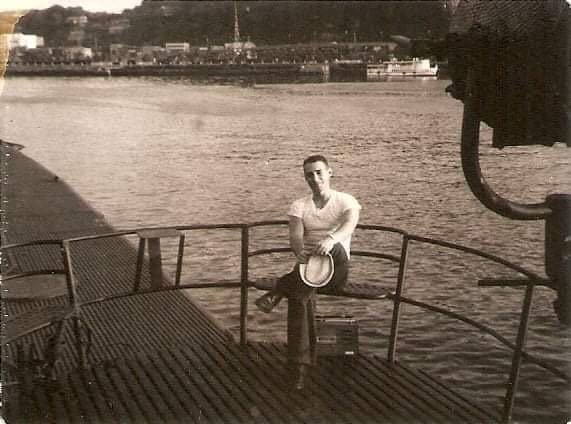
Sid on one of his submarines taking a break above the surface
The first submarines were WWII leftovers, the Baya, Clamagore, and Irex. These subs were diesel powered and built in 11 months in mass production for the war effort. On the Baya, Sid fondly remembers the dog they had as a mascot. Once the WWII subs were phased out, he served on the Shark, Lapon, Abe Lincoln, John Marshall, John C. Calhoun, Mariano G. Vallejo, and the Florida (his last one). These nuclear-powered subs, having their own power plant, could stay below the surface for incredibly long periods of time compared to their diesel-powered predecessors.
I asked Sid about living and working with others in the confined spaces of a submarine, in context of these societal times of change as I know his experiences could teach us all. He shared that on a submarine everyone is equally important and to treat each other with that mindset, or they all could end up at the ocean bottom. Most everyone got along and would learn to stay out of each other’s way knowing the nooks and crannies of the working and living spaces. During his early years in the mid to late 1960s blacks could not serve in certain roles, yet he rightfully saw at the end of his career that the only color that matters is red; he shared that some southerners he served with could not accept black sailors being equal and it had to be enforced. When on a submarine, he knew that prejudices need to be checked at the door (or hatch) as they needed to work together and knew after a couple months at sea, there is a likelihood to go stir crazy.
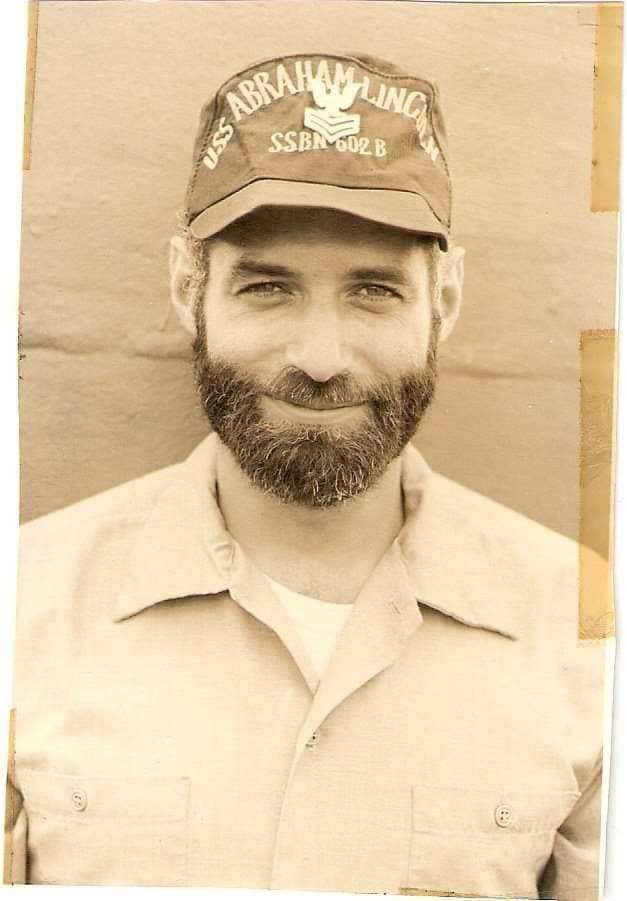
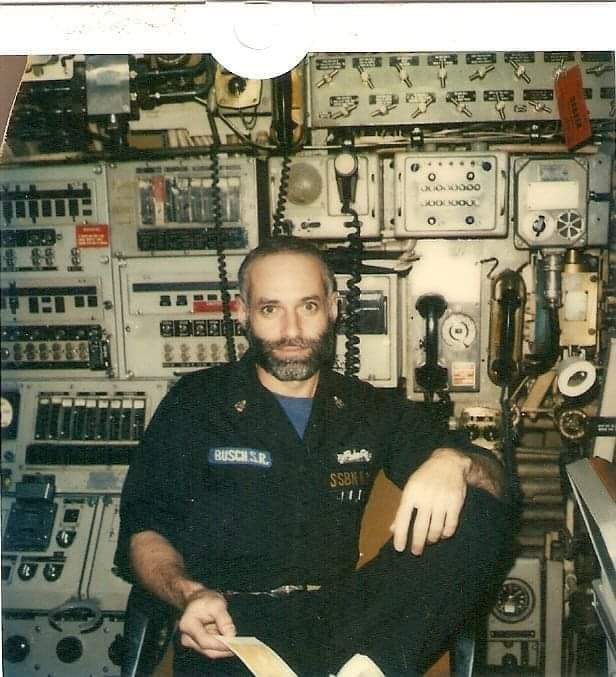
Sid at the Office, one very hard to find at any point in time
Another chance encounter stood out to Sid during his time in the Navy. During a stop in Norfolk, Virginia in 1973 there were some Russian Frigates visiting and he met some Russian sailors. He came away thinking how much they had in common, and how they got along with them and their families. This was the height of the Cold War, and it does make one scratch their head and think, why can’t we all get along, especially the decision makers in government.
Seeing as a nuclear submarine can stay at sea for incredibly long periods of time, the main issue is making sure not to run out of food and that there is coffee. While on a mission the coffee machine broke, and they conveyed to the Captain that it is the world’s best interest not to trust decaffeinated sailors, so a special project was launched to rebuild the coffee machine and they did. Crisis averted.
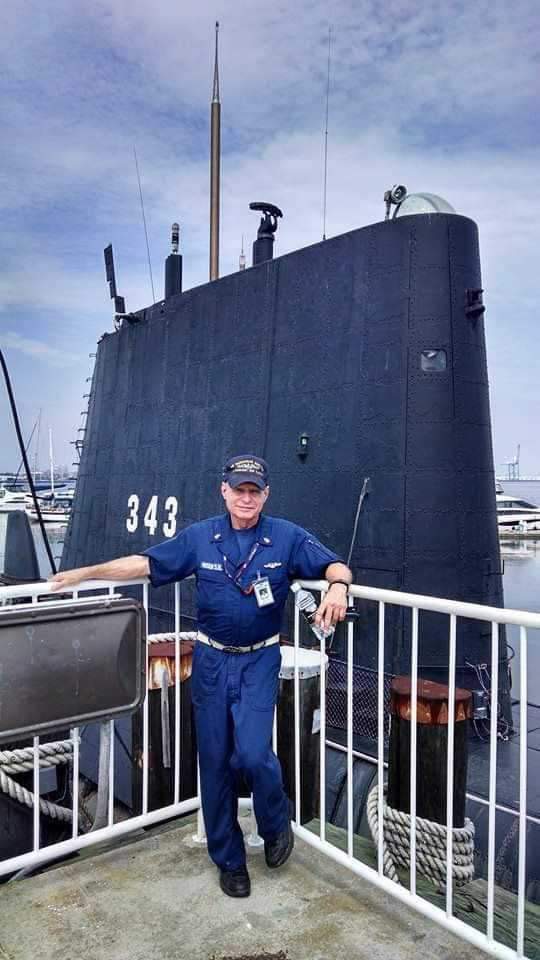
Visiting one of his first subs served on, the USS Clamagore
He does vividly remember coming into port for the last time, with the civilian world in waiting. The USS Florida was his last submarine, and it was scary disembarking for the last time knowing he now needed to decide daily what to wear. The civilian world is an adjustment and not very organized compared to military life, he would get people to form single lines out of habit.
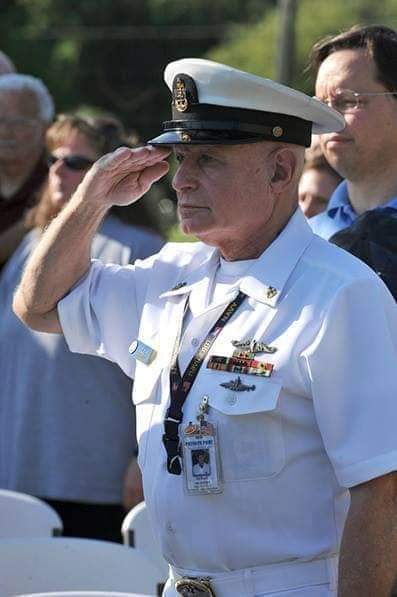
Thank You Sid
An Unwelcome Homecoming and Life Changing Call to the State Room
Many of us still recall, and others have read, that the Vietnam War was certainly one that was not fully supported at home. As a child, I remember my Mom immediately turning the television off when any news and footage came across the screen. The U.S. involvement increased over the years across several presidential administrations, with the fear being if Vietnam fell, the rest of Asia could soon follow. Having grown up in Southeast Asia, I witnessed that fear never did materialize.
“Anyone who isn’t confused really doesn’t understand the situation.” – Edward R. Murrow
The welcome home that many returning military service members received was less than welcoming to say the least. For Sid, he served in his submarine off the coast of Vietnam tracking Russian subs and their activity, being ready for action at a moment’s notice. When he came home and docked in San Francisco, what he describes as a hippie female came up to him, called him a baby killer and spit in his face. There were 50,000 servicemember lives lost in Vietnam, and one thing many of them never received was a ‘Welcome Home.’
In 1974, Sid was assigned to the USS Shark and on a mission at sea. He had been married to his wife, Alicia, for around nine months and they had a son, Seth. On August 10th, 1974, the Captain summoned Sid to the State Room and he thought he was in trouble. Rather, it was troubling indeed and there was no easy way for the Captain to say this; his wife and son had been killed by a drunk driver when they were on their way to the doctor for a check-up for Seth. Sid was angry for many years and knows full well that time does not heal all wounds. The drunk driver ended up getting seven years, which only fueled the anger, and he would struggle to maintain control of himself at times. He learned more about himself and that he does not like downtime, and he turned more of his focus on doing something that helps families and in turn, helps him.
I think most of us would understand completely if Sid instead focused on himself primarily after such a tragedy.
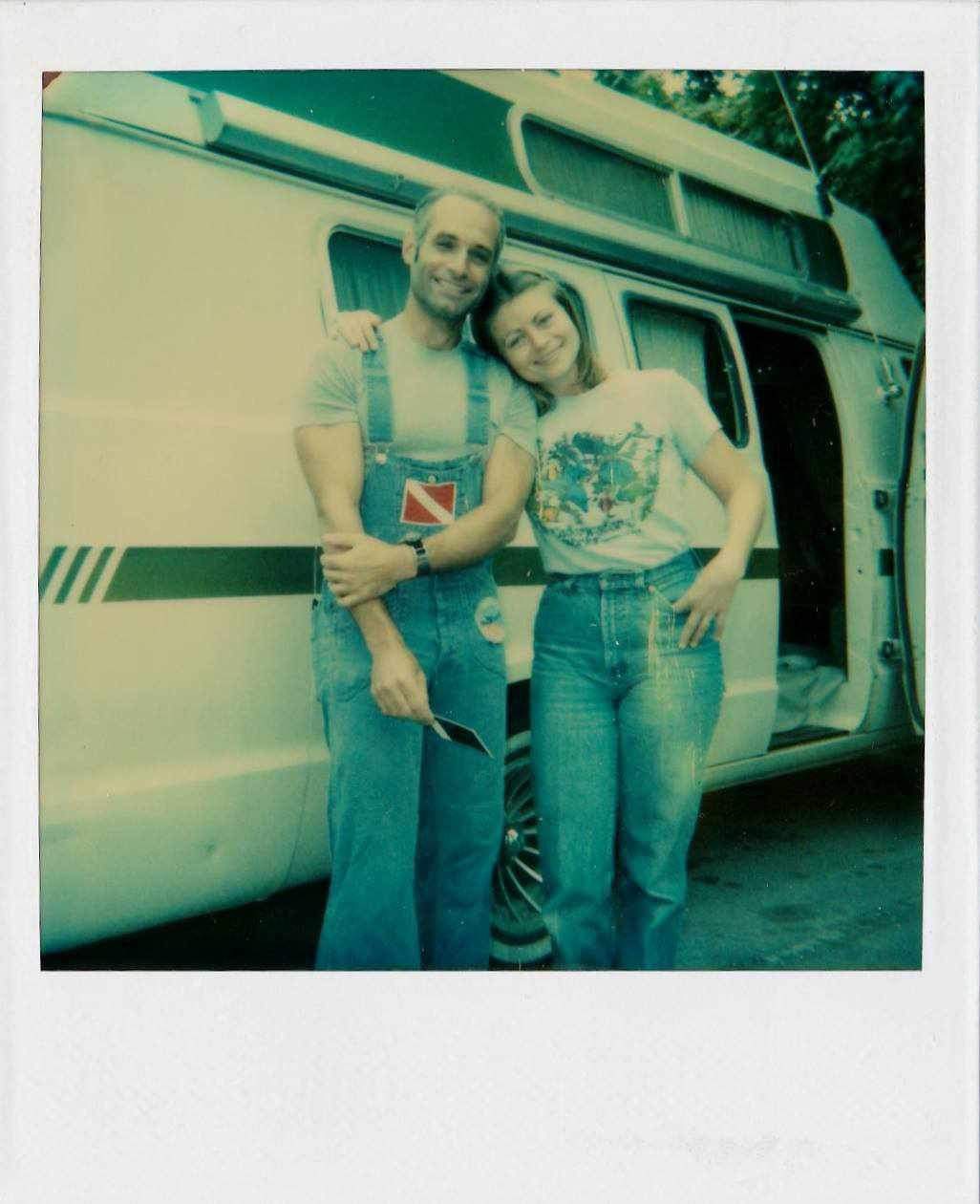
Sid’s only picture of him and his wife Alicia, it is difficult for him to look back at these times.
“There is a sacredness in tears. They are not a mark of weakness, but of power. They speak more eloquently than ten thousand tongues. They are messengers of overwhelming grief, a deep contrition, and of unspeakable love.” – Washington Irving
A Ruptured Disc followed by over 200 Marathons, BQs included
To put this in perspective, Sid is now 77 years old. He has run 206 marathons on several continents and at one point in his life could run it in less than 3 hours: 2:54:51 in Vancouver being his PR. He was able to run Boston twice, in 2010 and 2011, towards the end of his running career and has run at the base of volcanoes, London, Glasgow, at Loch Ness in Scotland, and in Guam where they start at 4am and coconut crabs along the course are mistaken for manhole covers. There was a time period where he ran 6 marathons over 6 weekends in a row for 6-7 years. He loved it so much he won a trip to run the Chicago Marathon by running the Cooper Bridge Run in Charleston, SC and wrote what running means to him. He also qualified for Boston in the 1990s however the Navy would not allow the excuse from service. So, no problem, he qualified again later.
Sid started running in 1981, and hard to fathom his interest considering how many days a year he was several fathoms beneath the ocean surface. He ruptured his disc and needed to prove to the medical board he was still fit for service. After a 3:45 marathon run in Savannah, Georgia to prove his point, the Medical Board must have raised their collective eyebrows and said something along the lines of “Impressive! You ARE fit for service.”
“Winning has nothing to do with racing. Most days don’t have races anyway. Winning is about struggle and effort and optimism, and never, ever, ever giving up.” – Amby Burfoot
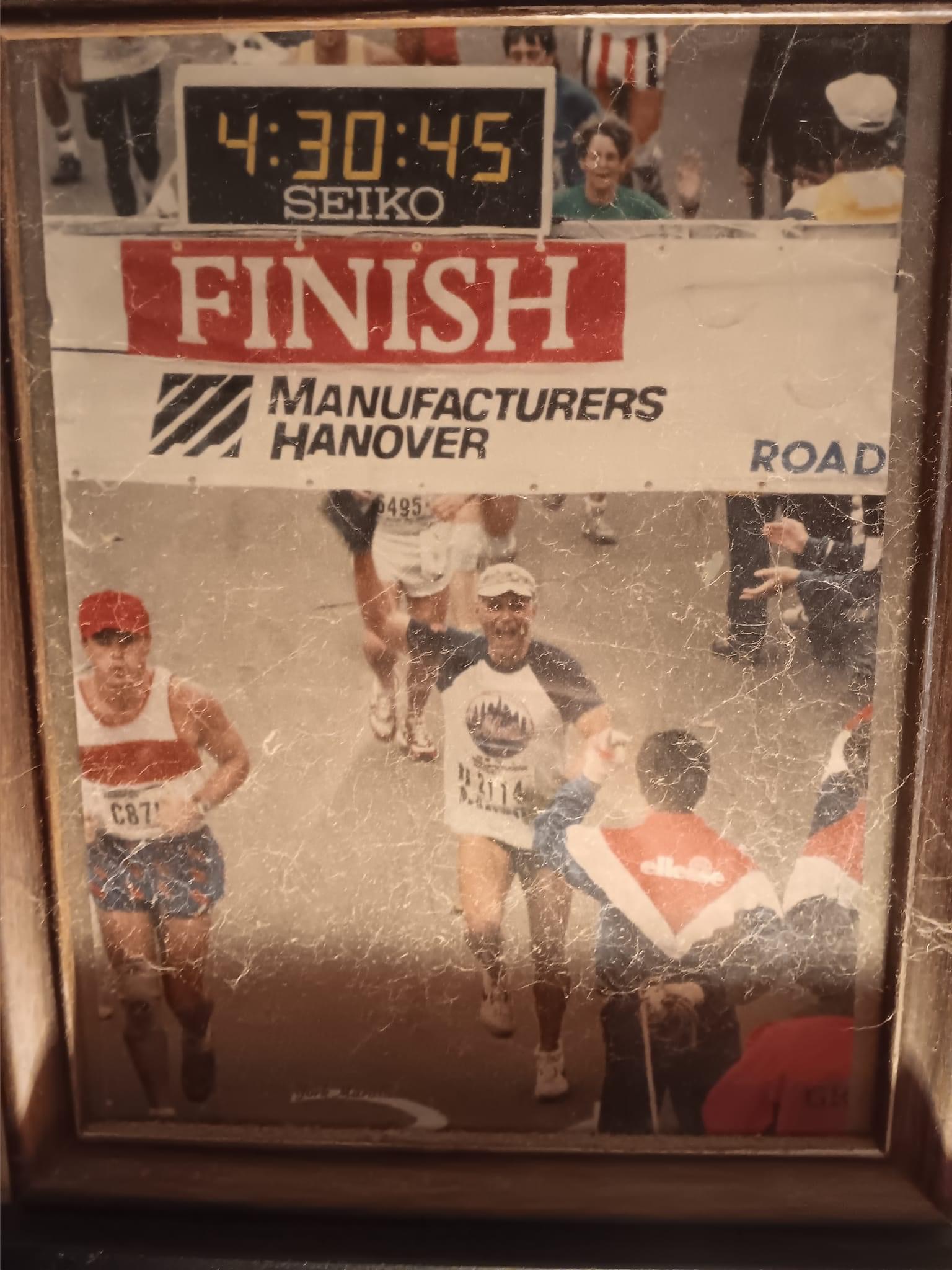
Fit for service, and running over 200 marathons…this one in New York 1986
I could listen to Sid’s running journey and stories forever, and his heart to remember fallen heroes is one we should emulate. He ran his final marathon in 2020, the virtual Marine Corps Marathon where he had 40 people to keep him company and was awarded his medal at the finish line arch by a Marine who served in Fallujah. There was no better way to end his career than that and it took 8 hours.
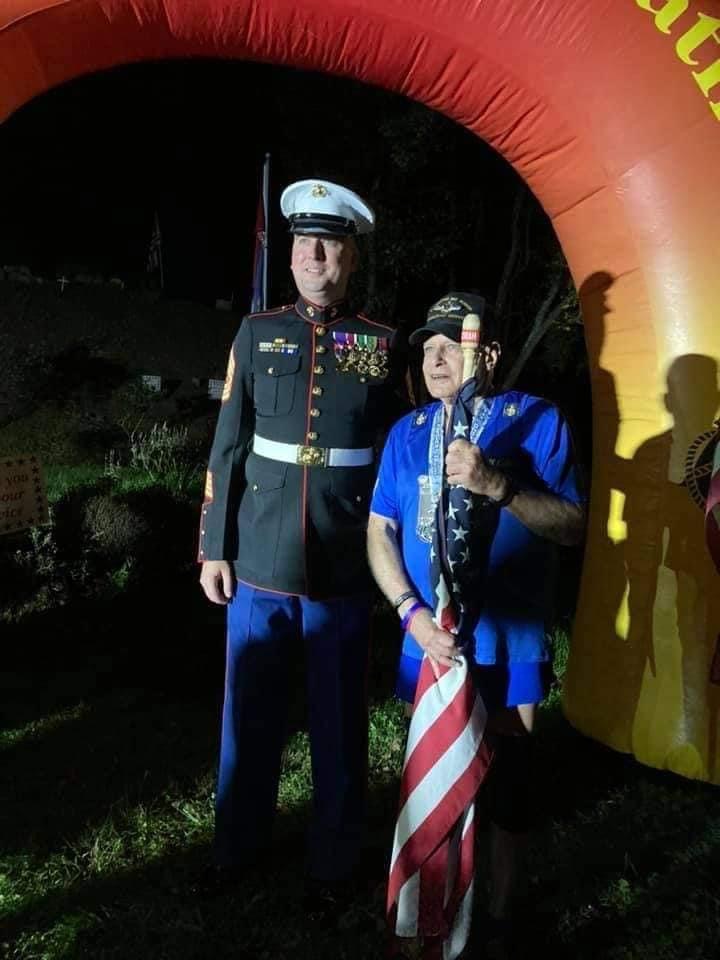
After crossing the finish line at Sid’s final marathon in 2020
A Run to Honor, and an Honor to Run
Before that final 26.2, there were others, such as the one he ran for his cousin David who was killed in the World Trade Center in 2001; Sid had run 6 marathons with him previously. There was running to remember Staff Sgt. Jimmy Malachowski who told his mother before his 5th deployment that his greatest fear would be no one knew he existed. He was killed in action and his last words were “Are my men ok?” We do remember Jimmy, and Sid sure does. There was Corporal Matthew Dillon , killed in action in Iraq on 12/11/2006 and after running to honor their son, his parents presented Sid his medal in person. Sid visited the grave of someone he never met, Private First Class Josh Klinger of Easton, Pennsylvania who was killed in action in June 2005. These people that sacrificed everything and honoring them is what helps keep Sid going, and serve as his fuel and focus. He often runs carrying the American Flag to honor the fallen. We can get lost at times hearing about celebrities when there are selfless others giving their lives to serve and protect that go unrecognized.

Sid with his fuel and focus
It never fails to amaze me how we can come across others in our lives. I did not know Sid well however knew he was involved with Meg’s Miles community, and knows first hand we can all turn pain into purpose and run as one. He found out about Meg Menzies and her story from his friend, Donna Schultz and came to Richmond, Virginia as many other runners do for the Richmond Marathon in November. He met Meg’s parents, Pam and Wirt, and shared that Meg seemed to be such a beautiful person taken from us needlessly; even though he had never met her he had a feeling he had through her parents. Sid shared a sad connection to Pam and Wirt, having lost his wife and son to a drunk driver. For someone he never met, Sid ran to remember and honor Meg and her parents.
Organizations that serve and honor our veterans that Sid focuses on include Wear Blue: Run to Remember, the Wounded Warrior Project and The Gary Sinise Foundation; he has met Gary Sinise who conveyed that he deals with important people each day, namely our veterans.
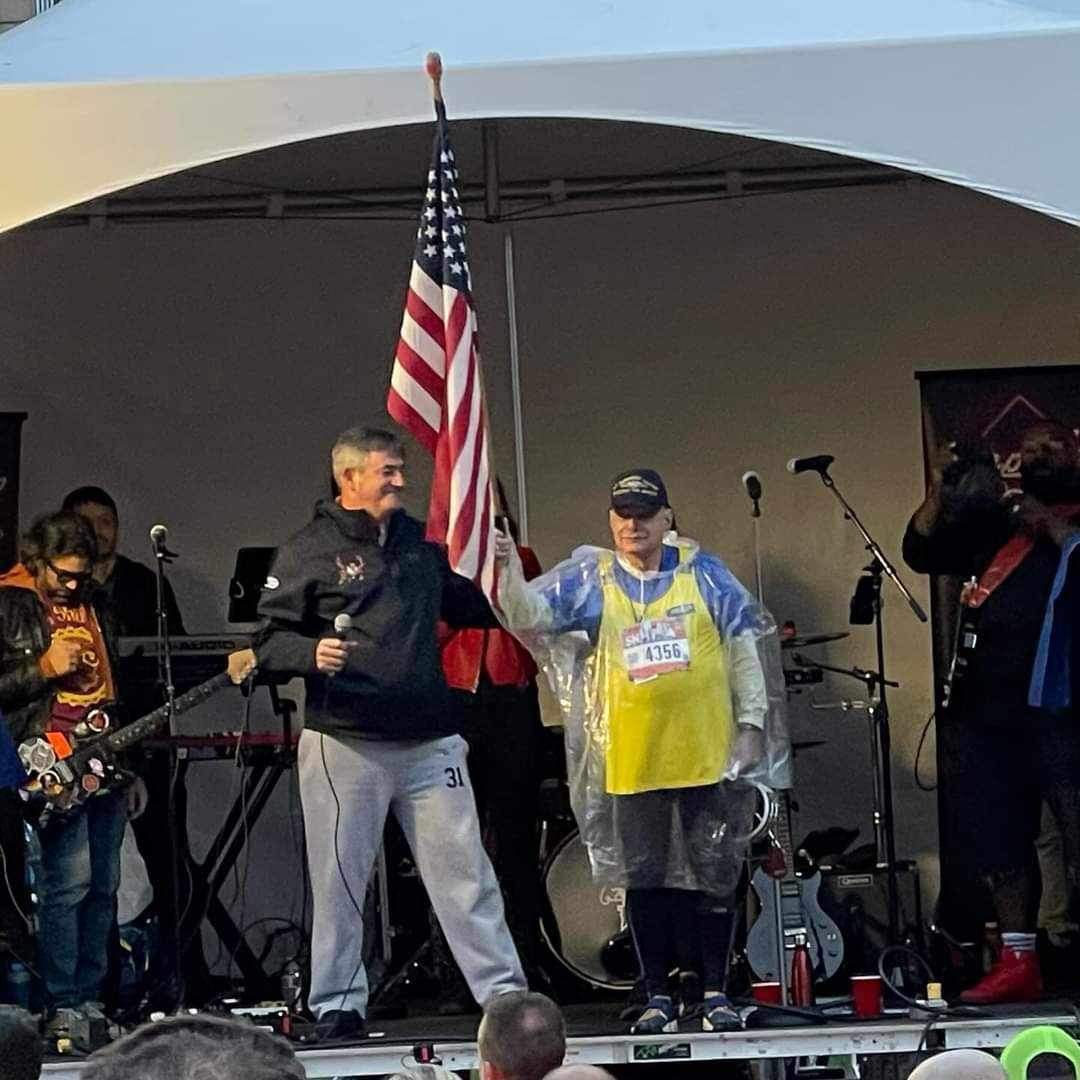
After a marathon, a time to honor service members
When I asked him what is something that each of us could do that may help our perspective, Sid shared that every American should visit Arlington cemetery at least once. That remembrance is what help keeps him going.
“It’s not how you run, it’s how you run your life.” – Wirt Cross (Meg’s Dad)
Family, Childhood Friends, and What We Can All Do
Sid remembers his family fondly, and now is the last remaining member.
He talked to him four days prior in 2012, Peter Busch went to Harvard and then Yale for his graduate work before becoming a Political Science professor. When they first got a television in their childhood home, Peter would be the one yelling down the hall to Sid to ‘Turn it Down!’; he liked to read. Peter struggled with depression which was prompted by physical problems, and committed suicide on a day nobody saw coming. Hearing Sid share about his brother and their forever connection and love for one another, I know it brings a fog to his heart and he misses him everyday.
Ada Busch, Sid’s Mom, was always active and audited college courses at the age of 100. She lived to 102 and died in 2017 due to breast cancer that could not be treated due to her age; however Sid is extremely grateful for the years he had with her. It is rare to have a parent with you when you reach your 70s, and Sid knows he was blessed with her presence.
As for Sid’s Brooklyn brother, Clayton, they both knew after high school they were serving in the Armed Forces in Vietnam and kept in touch from time to time. In 1974, Sid received a letter from Clayton’s Mom, who cared so much about Sid and his friendship with their son, that let him know Clayton was killed in action and would not be coming home. As I heard this story, I could not help getting misty in the eyes myself as we all have childhood friends that we long to go outside with one more time then come home when the street lights signal to do so. He went to the Vietnam Memorial Wall in DC to honor Clayton and remembers their years fondly.
“Our childhood friends are always a part of who we are and what we have become.” – Anonymous
Through all the years of service, and trials Sid endured, what inspires is his heart to remember not only those close to him, rather those he has never met yet we all should remember. He sees the world through eyes of gratitude, appreciation, and wonder, and treasures life’s simple beauty such as human connections, the places and people where he has ventured and met, and exemplifies that there is no stronger force than loving others, regardless of the circumstances.
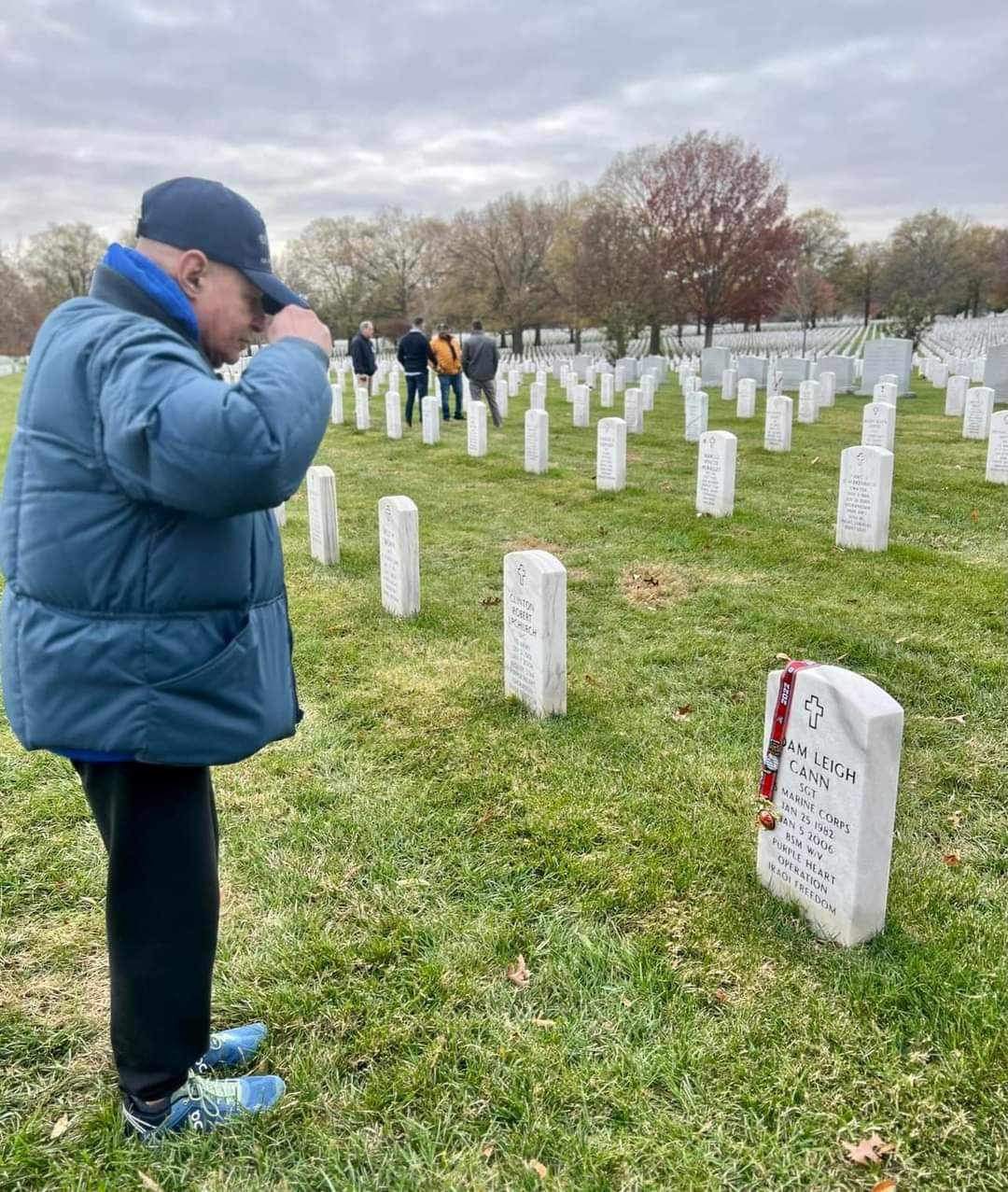
After running to honor for a fallen soldier, Sid visit to give his respects and award the medal
I asked him so, what can we do? There are small things we can all do to honor others who have served our country, such as volunteer at a Veterans Hospital as many of them do not have families, plant flags at military cemeteries, or simply when seeing a Vietnam Vet say “Welcome Home.”
Many of them, such as Sid, never got welcomed back home.
Know you like Jazz, and figured this may take you back to days of playing stickball with Clayton, growing up with your family, or taking in the world around you on a marathon course while honoring somebody you never met. Louis Armstrong has quite the story himself, yet would not let it circumstances define him and his view on life, and wants us all to know we all can too.
God Bless you Sid, your hardships and heart for service is heart aching, heartwarming, and inspiring; thank you for sharing your story for Veteran’s Day.
And, Welcome Home.
Thank you for sharing your story.
Ed
 Bleed As One